Strings Attached - the Story of Max the Ho Hum Husky now available on Amazon!
Episode Two: The Lead-Up to Max – No Pun Intended.

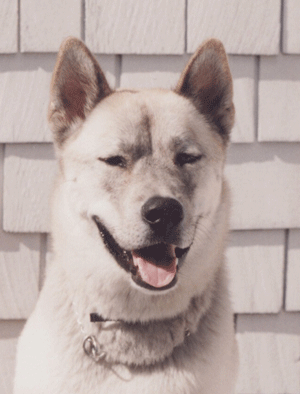
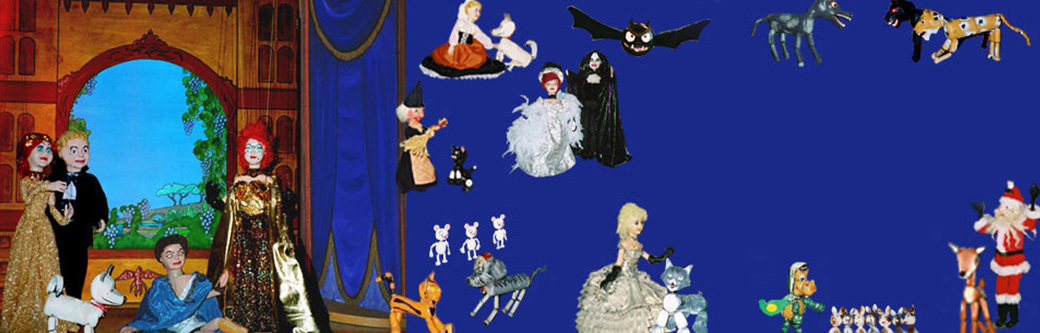
Max, our much-loved family pet, was the inspiration for fourteen of the twenty Elwoodettes shows, and with his puppet look-alike, he made over 100 bows on the stage of the Bernie Legge Theatre. Our cat, Minx, the Manx, also exists in puppet form, although she, cantankerous cat that she is, never deigns to go down to the theatre in person. However, audiences who came to our marionette musicals at the Bernie Legge Theatre were familiar with the ongoing feud between Max and Minx. The onstage shenanigans between the misbehaved pair were definitely taken from life. Both cat and dog were feisty in nature and often misbehaved, and their rivalry continued on into old age.


Their ongoing feud seemed most ironical, since their predecessors, Beanie and Georgina, were exemplary pets, so much so that they featured in our show, The Cinderella Caper, as The Heavenly George and The Angelic Bean, coming to earth to help Max solve the problem of an exploding pumpkin, and expressing horror at the lapse in taste their master had shown in acquiring their replacements. So before I embark on the story of Max, I should say a few words about his predecessors, and what was happening in our household in the days before he arrived.
Actually, Max had had many predecessors over my lifetime. From my childhood in England, there was Puddy, the Persian, who used to tree the cat next door, and Winky, the white mouse, whose goal in life was to avoid Puddy. Once in Canada, I fell in love with Pooch and Rocky, two beautiful borrow-a-dogs, until the family acquired a dog of its own – the mutt in question being a Belgian Shepherd cross named Maverick who was hell-on-paws and as wild as his name suggested. Maverick was followed by Circe, Cerberus and Diana, three gentle German Shepherds, and Lighthouse, a big black moggy who we found abandoned in Lighthouse Park. However, Max’s immediate predecessors were George and Beanie, the pets Hugh and I adopted when we were first married. George and Beanie were loving household companions, who oversaw the arrival of our two daughters, Caroline and Katie, with equanimity and proceeded to treat them with the same anxious maternal supervision as Nana demonstrated towards the Darling children in Peter Pan.
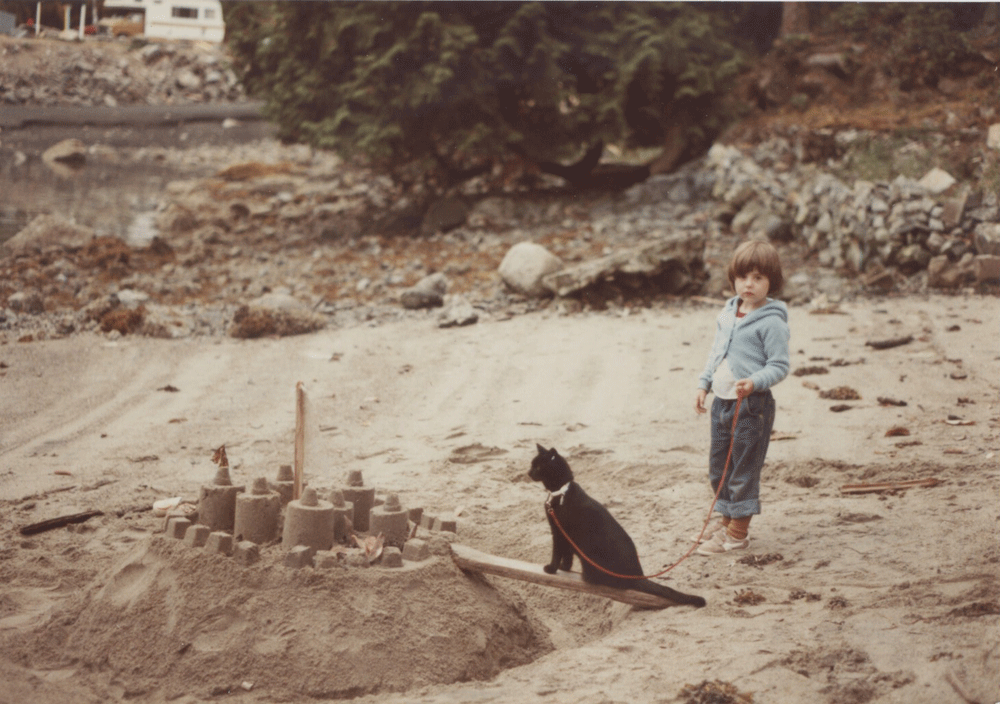
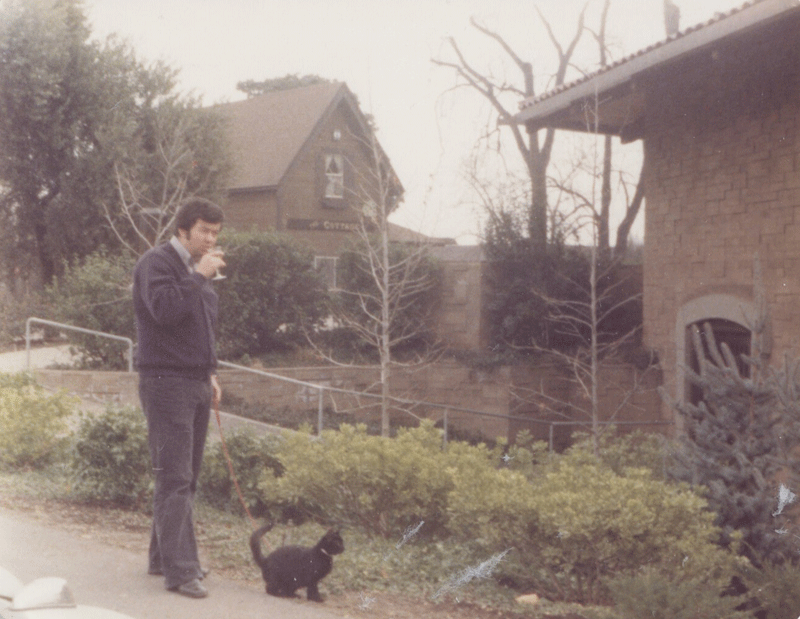
Georgina was a silky, black Halloween cat, with yellow eyes and a gentle disposition. She walked on a leash or rode in a snugli, and also travelled well. She not only came with us on our honeymoon to Santa Barbara, riding serenely in an open basket as we went sight-seeing, but accompanied us regularly on family holidays.
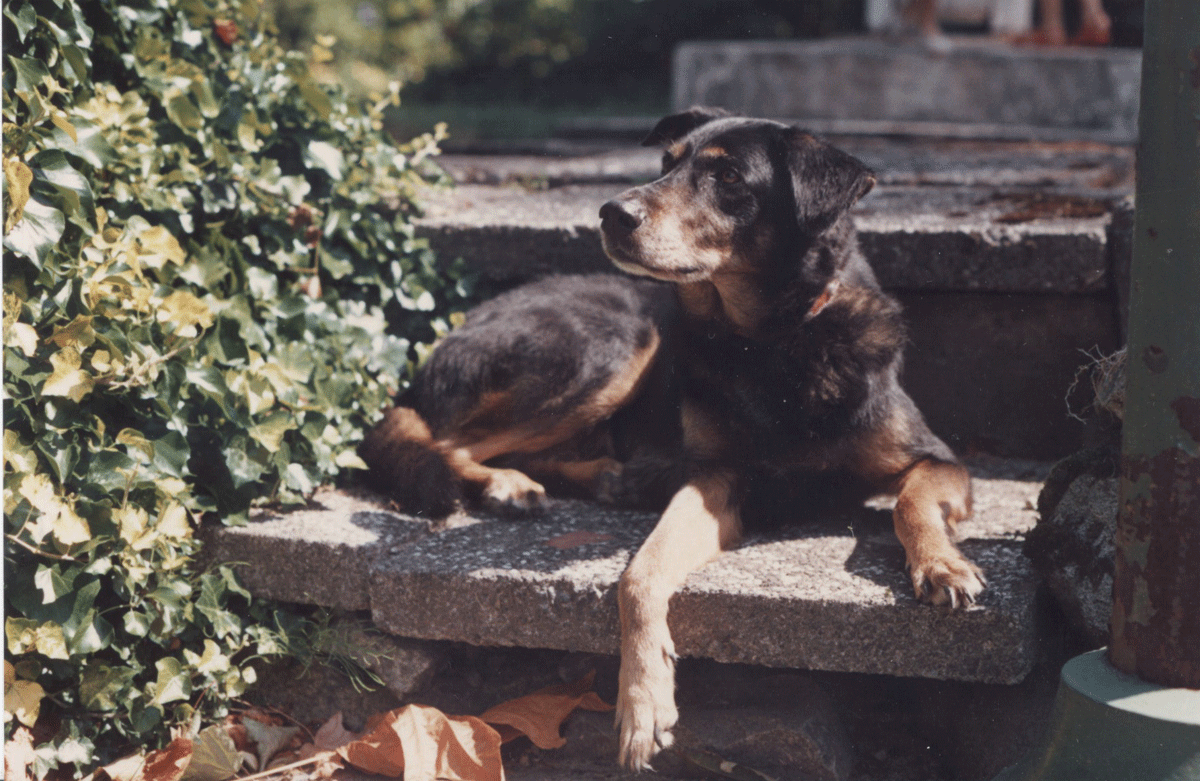

We acquired Beanie when George was two. After receiving a few disciplinary whacks on the nose, the puppy settled down and treated George with respect. However odd it might seem, given that Beanie was a Dobie/Shepherd cross, Georgina decided that the dog was her baby, and the two were bonded for life. When Beanie was old, she developed congestive heart disease, and we would often come home to find Georgina snuggled up to her on the floor, comforting her when she didn’t feel well. It was heartbreaking, but not a surprise, when Georgina’s own health deteriorated rapidly after Beanie died.
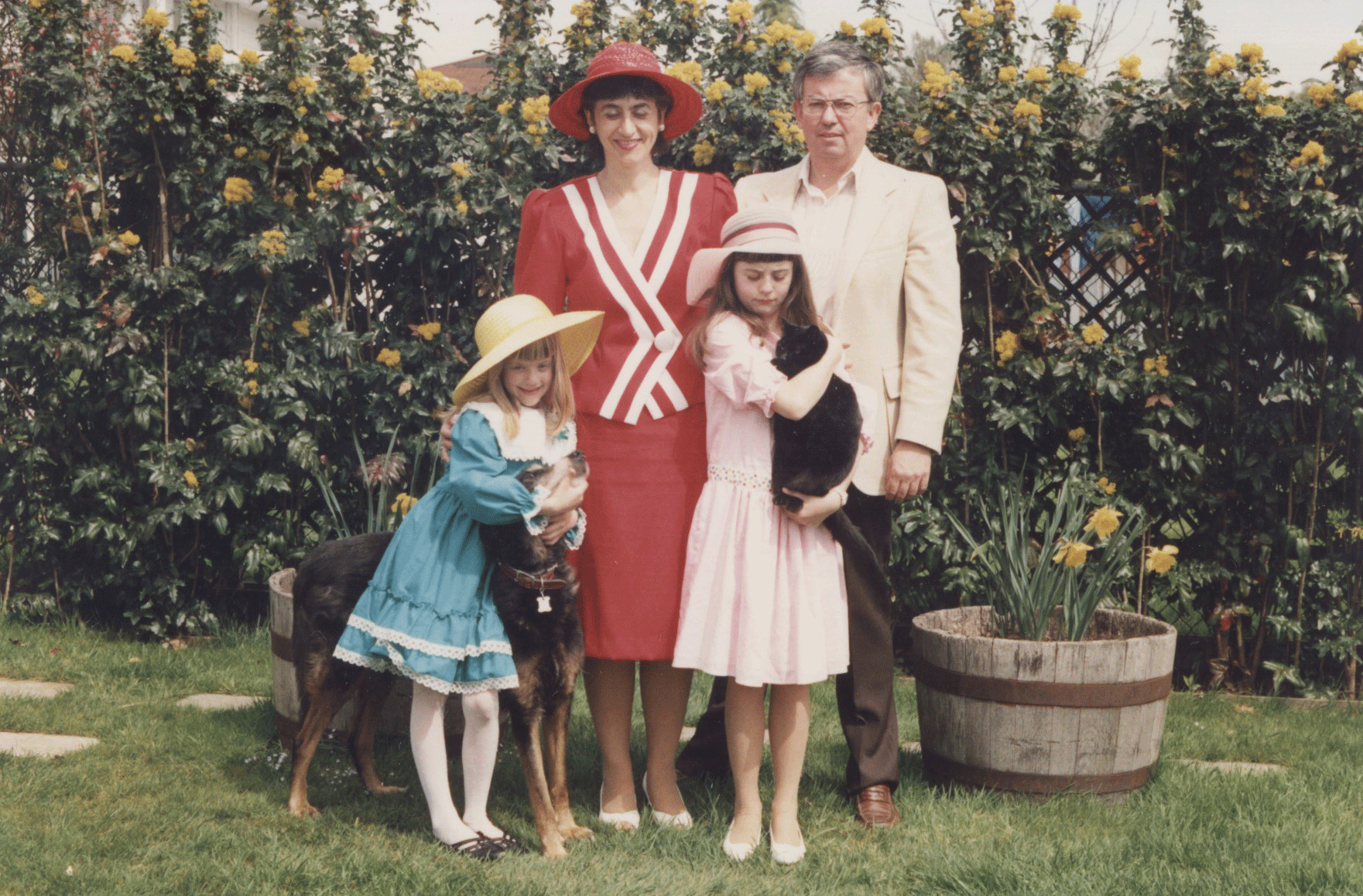
Our household didn’t seem right without a dog, and our daughters were anxious to adopt another one. Thinking a new puppy might perk up Georgina, we agreed, and all set off for the pound. Not surprisingly, the girls immediately picked a puppy that looked just like a young version of Beanie. It seemed docile enough, but to our horror, once home with the family, the puppy turned out to be hysterical and anxious, terrorizing the cat and biting everyone in the family within the first week. With a distressed elderly cat on my hands, and a puppy that was clearly agitated at being in a household with lively children, I had a major problem on my hands. Carson Wilson, the head of the Burnaby SPCA at that time, was a kind-hearted man who loved animals and was into practical solutions. He assessed the situation quickly. Lucky was a puppy that needed a laid-back environment. Within the week, he had found her a perfect home – a hobby farm where she could hang out and interact-or -not with humans at will. A Lucky dog indeed. The children were sorry to see her go, in spite of the chewed portions of their anatomy, but Georgina breathed a visible sigh of relief and settled down to her declining months in peace and quiet.
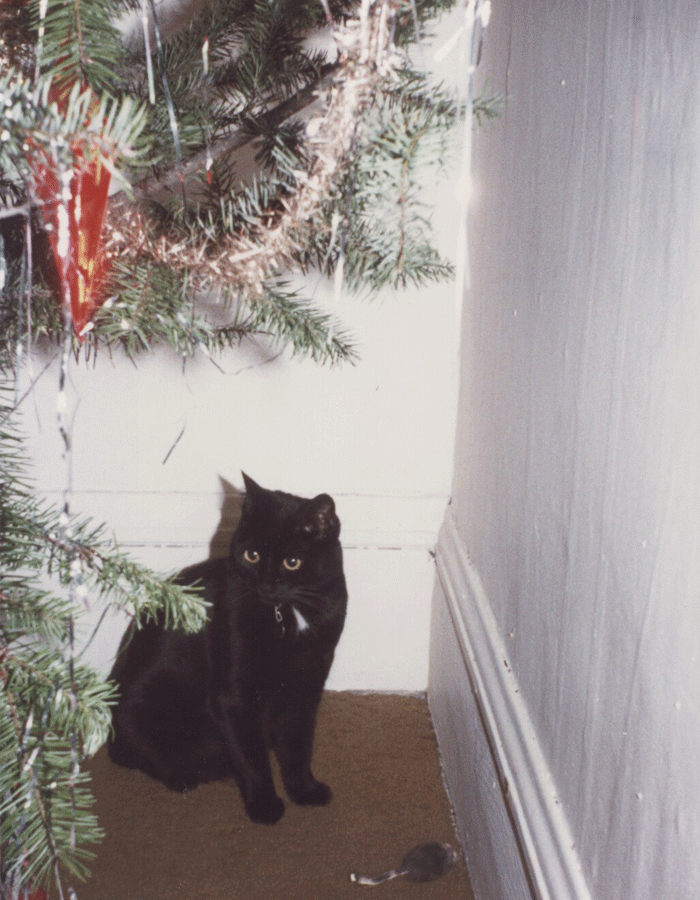
Our darling George passed on to Cat Heaven on December 8, 1992. Needless to say, Christmas was subdued that year. However, soon the girls began to push for another dog, so I called Michael Weeks, the then head of the Vancouver branch of the SPCA, and let him know that we were in the market for a new pet. Not that I needed a puppy in the home at that point, for we were busy preparing our first family puppet venture, a marathon effort involving nine children and myself, all alternating as puppeteers and vocalists, taking an hour-long show to three different venues as a charity fundraiser for Canuck Place. A couple of days before our first performance date, Michael called me back and told me about a dog that needed a home. This was not to be an adoption from the SPCA, but a private arrangement. Michael had received a call from a lady who wanted to find a good owner for their four-month-old puppy due to the fact that her son had health problems and she was having trouble coping. The dog was a husky- shepherd cross.
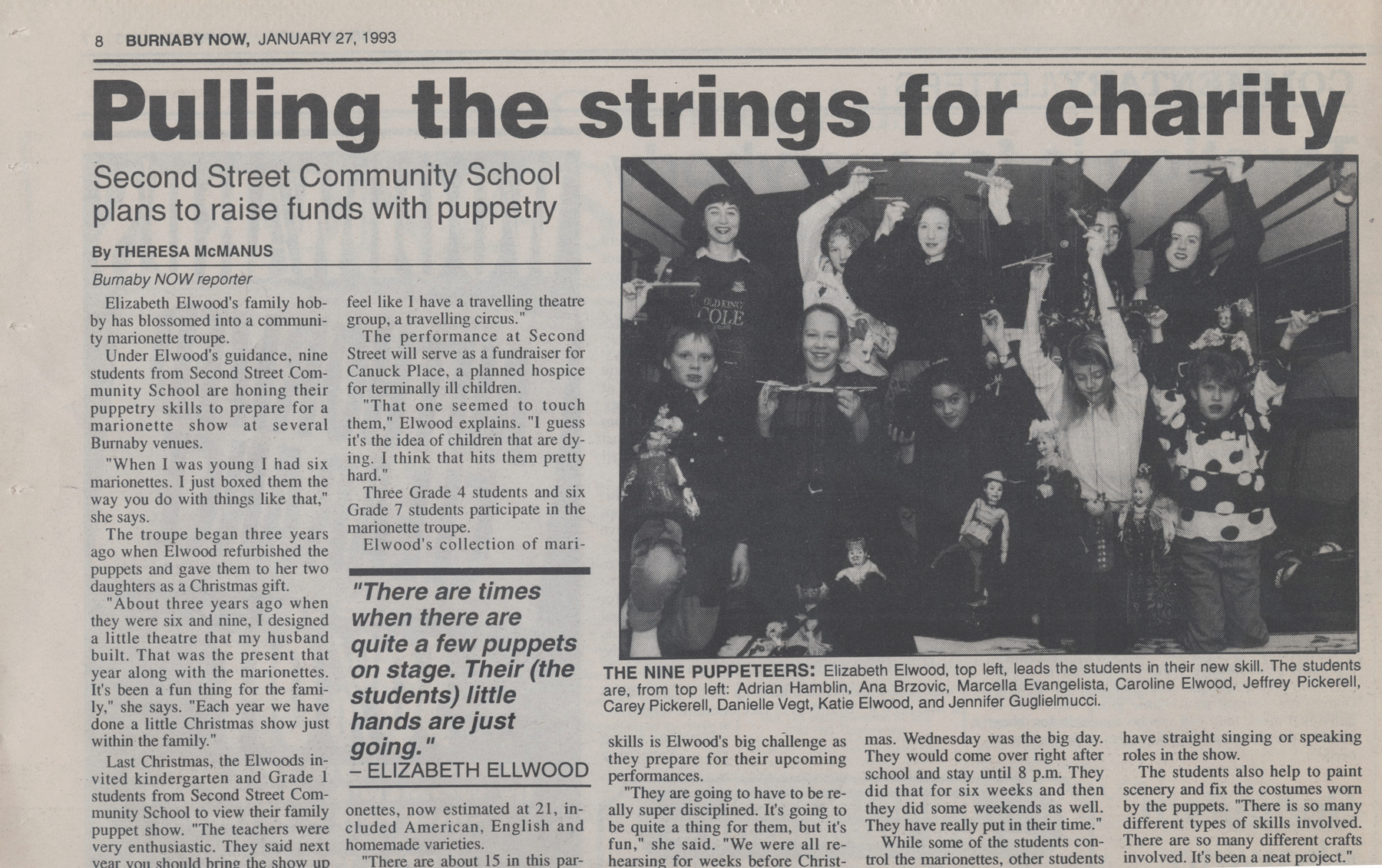
On January 27, 1993, my youthful troupe of performers sang and stringed their way through four performances of Babes in the Wood at Second Street Community School. Between shows, I alternated between keeping the kids happy, dealing with local newspaper coverage and making calls to the RCMP to talk my way out of the parking ticket I’d found on my windshield the previous day when I’d returned to my car after loading all the show equipment into the school. At the end of the school day, Hugh, who was teaching at Alpha at the time, hurried over to join us. My mother had come over from West Vancouver to see the show, so she looked after the girls while Hugh and I dismantled the theatre, loaded it into the trailer, and moved it to the George Derby Centre in preparation for the next show. Once we finished unloading our gear, we returned to pick up Mum and the girls and took them out to dinner. No, I didn’t feel like cooking that day.
However, the work of the day was not yet complete. My diary for that day closes with the following entry: “Then to Delta to see a dog called Max that might be up for adoption.” Such a casual note to signal what was in store.
Next: Max Arrives.