“…riveting mysteries…once they’ve experienced the entertaining and engrossing stories in The Agatha Principle, satisfied readers are very likely to seek out the other books in the series as well.” ***** —ForeWord Clarion Reviews
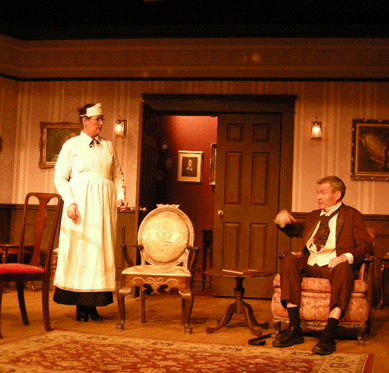
Johnny Duncan, known in the Vancouver theatre world as Mr. Metro, has always wanted to direct Sir Terence Rattigan’s wonderful classic drama, The Winslow Boy. Having waited for years for the opportunity, it has now come twice in a row. Last year, Vagabond Players in New Westminster, produced the play at the end of their season. Now Metro Theatre is remounting the production for its own patrons. What a bonanza for Vancouver audiences, as well as for Johnny!
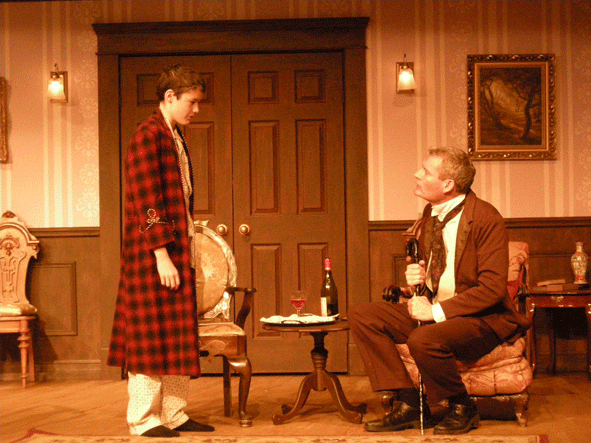
Adrian and Michael Jones as Arthur and Ronnie Winslow.
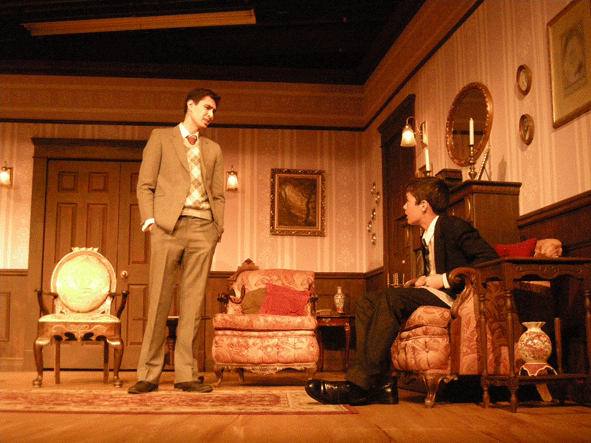
Considered the greatest of Terence Rattigan’s plays, The Winslow Boy is set in the years leading up to World War I. Inspired by a precedent-setting historical event, the play depicts a riveting battle against the establishment. When Ronnie Winslow is accused of stealing a postal order and expelled from the Royal Naval Academy, every member of his family is affected by the struggle to clear his name. His father, Arthur, is determined to vindicate his son at any cost, but the cost is high. His own health deteriorates, financial hardship eliminates his older son’s prospects for higher education, and the ensuing scandal jeopardizes his daughter’s engagement.
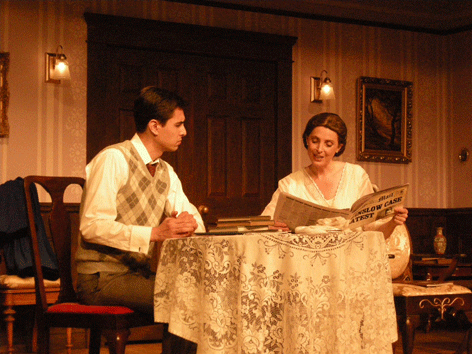
Kris Michaleski and Adrian Jones as Dickie and Ronnie Winslow.
In spite of overwhelming odds, Arthur pursues justice, first through the Military Court of Appeals, and later, through a daring challenge to Parliament. Handling the case is Sir Robert Morton, a brilliant barrister who believes as firmly as Catherine and her father that ‘Right’ must be done. Recent revivals of Terence Rattigan’s work are starting to appear in film remakes, such as The Deep Blue Sea, and on many prestigious stages around the world. The current Old Vic production of The Winslow Boy has opened to a rave review, and the value of this playwright’s exceptional work is being realized again for the excellent theatre it is: http://www.telegraph.co.uk/culture/theatre/theatre-reviews/9940315/The-Winslow-Boy-Old-Vic-Theatre-review.html
Alison Main-Tourneur as the lovable maid, Violet, with Michael Jones as Arthur Winslow.Kris Michaleski and Gina Raye-Young as Dickie and Catherine Winslow.
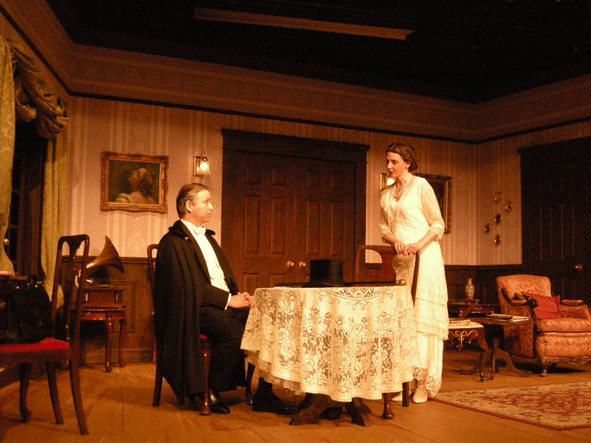
I was privileged to be the set designer for the Vagabond Players production, and it was lovely to see my design come to life again when I attended the gala opening at Metro Theatre. As before, the show is visually attractive and utterly engaging. Real-life father and son, Mike and Adrian Jones play Arthur and Ronnie Winslow, and Isabel Mendenhall delivers a charming performance as the beleaguered mother who questions whether the sacrifices made in pursuit of justice are truly worthwhile. Gina Raye Young is outstanding as Catherine Winslow, the daughter whose engagement is threatened by the publicity that surrounds the trial, and her interaction with Gavin LeClaire as the lawyer who handles the case provide some of the most enthralling moments in the show. Kris Michaleski makes a likeable Dicky, the brother whose future is affected by the family’s financial struggles, and Alison Main-Tourneur is delightful as Violet, the loveable parlourmaid who has been with the family for many years. New to this cast is Roger Kettyls, who delivers a superb performance as the family friend who has long been in love with Catherine. Also stepping in valiantly for the Metro production are Chris O’Connor as Catherine’s fiance and Iris Gittens as the reporter sent to cover the case. Rob Stover, the fine performer who played Desmond, in the Vagabond production, will be playing Sir Robert Morton during the second half of the run, and I look forward to seeing him in his new role.
Gavin LeClaire as Sir Robert Morton and Gina Raye Young as Catherine Winslow.
Many times filmed for BBC television and twice made into a movie, The Winslow Boy has attracted such illustrious performers as Nigel Hawthorne, Emma Thompson, Gordon Jackson, Jeremy Northam, Ian Richardson, Margaret Leighton and Sir Cedric Hardwicke. The gripping story, set in the visually glorious Downton Abbey period, will have you cheering for the Winslow family right to the final curtain. Vancouver theatre-lovers should welcome the opportunity to see this great play. Directed by Johnny Duncan, and with the beautiful original costumes of Cynthia Chow augmented with additional period pieces by Metro’s Sean Ullman, The Winslow Boy promises to be a highlight of Metro’s season. A thrilling classic not to be missed! The Winslow Boy runs March 23 – April 20, 2013, Thursday to Saturday – 8:00 pm, Sunday matinees, April 7th and April 14th – 2:00 pm, at the Metro Theatre Centre, 1370 SW Marine Drive, Vancouver, B.C. Box Office: 604-266-7191 www.metrotheatre.com
Next, on April 10th: St. Luke’s Players’ first-class production of Casting for Murder brings back memories of how the Beary mystery series began.
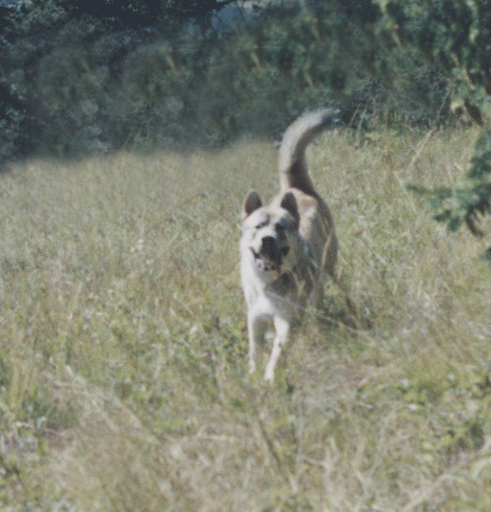
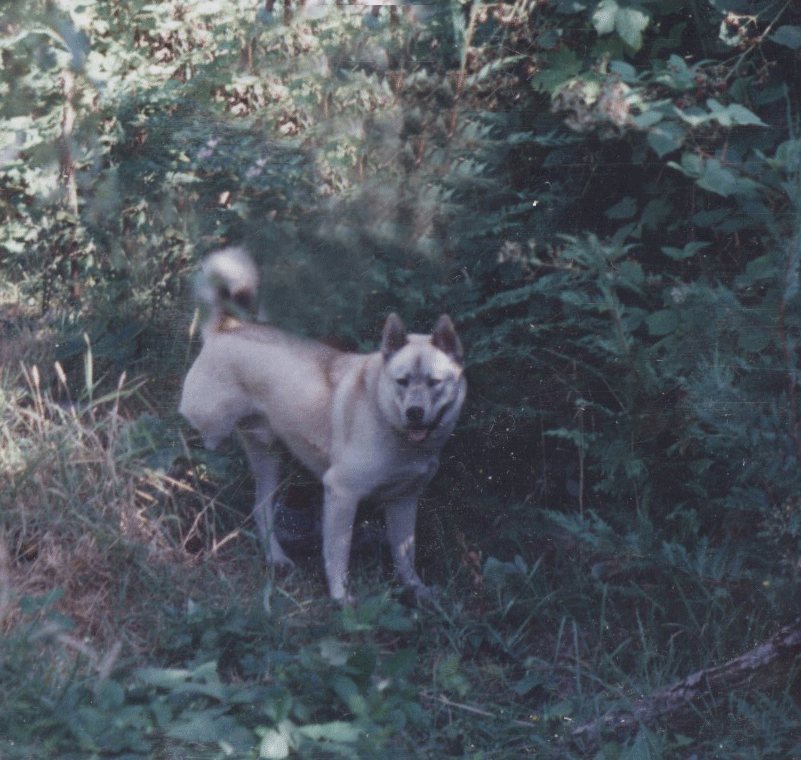
In the days following Max’s defiant sprint after the dog in the woods, he reverted to good-as-gold, and we were back to debating whether his misbehavior was just puppy high jinks or whether he needed serious training from an outside source. He had done very well during his visit at the George Derby Centre, and other than a lapse when he took off to tree two young raccoons on the trails, he had settled down well again. He was as happy being leashed for a walk to the store or coffee shop as he was being taken for a romp in the woods. He was attuned to our daily patterns, and woe betide me if I tried to send the girls back to school on their own after lunch. Max would get his leash and tear up and down the hall with it until I gave way and said we could go too. So although Hugh and I were still talking obedience school, some of the urgency had dissipated and we were content to roll along, guiding Max as best we could.
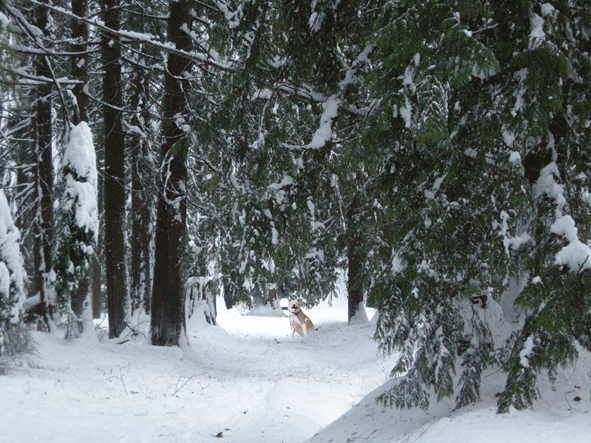
Max loved the snow.
Three weeks after we acquired him, something happened to make February 22 a momentous day in Max’s life. The bitter cold had continued, and on the Sunday, it had snowed, so come Monday, we were well bundled up as we set off for our morning walk. Max was very frisky, thrilled with his introduction to snow. After dropping the girls at school, we continued on to the Derby Woods, and he bounded about and had a wonderful frolic in the exciting new white stuff that lined the trails. As we reached the old sports field, I saw another dog-walker on the far side of the grass. This turned out to be a neighbor who lived near the Derby Woods. Her name was Edna Lotocky. The dog racing back and forth beside her was her new pet, Brandy.
Trouble
Over the years, Edna and I had met many times in Robert Burnaby Park, where I walked with Beanie and she walked with her aptly named St. Bernard, Trouble. The name sprang from the fact that Edna’s son had presented the new pup to her one Christmas Day when she had twenty-two people coming for dinner. However, the name turned out to be sadly appropriate. Poor Trubby was from a puppy mill. She was only six weeks old, full of ear mites and fleas, and had lost the sight of one eye. Mind you, Trubby could easily have been christened Lucky, because she couldn’t have found a more loving and caring owner than Edna. Still, true to her name, Trubby tended to be feisty, and whenever I had met Edna in the park, she had been squished into the bushes, holding onto Trubby to make sure there were no incidents. I was aware that Trubby had passed on and that Edna had acquired Brandy, but as yet, I had not met her new dog. Judging by the way Brandy was running free, I realized that Edna had acquired a more easy-going pet this time round.
Brandy.
I hailed Edna and hurried across the field. Max loped ahead, excited at the prospect of a new friend. However, when he reached Brandy, he jammed his brakes on. Brandy was six months older and already full grown. Max was daunted. He only came up to her undercarriage. Brandy, however, had no qualms about the newcomer. She was delighted to meet this eager new pup and started to run circles around him. Max was still overwhelmed, because she was boisterous as well as large, but she soon won him over to play with her. Edna and I continued our walk together, while the dogs raced about us. They were hilarious together. Brandy, with her long slim legs, would bound like a deer, circling around us, then charging back and forth. It was as if she had springs on her feet. Max, short and stubby-legged, thundered across the ground with as much deviation as a torpedo seeking its target. Brandy would leap in the air, and low-slung Max would zoom underneath her. By the time we finished our walk, he was exhausted. He flopped on the lawn in front of Edna’s house and had to rest before we set off for the walk home. When he finally got up and was ready to leave, he and Brandy kissed each other goodbye. It was the start of a lifelong friendship.
Best Friends
This first meeting with Brandy made a big impact on Max. The next day, we didn’t run into Edna on our walk and Max was visibly disappointed. When we reached the field, he looked for Brandy and was very dejected when he failed to find her. Then, the following day, when we met Edna again, Max was overjoyed. The two dogs frolicked so much that Max seemed relieved to go back on his leash at the end of the trails. Once again, there were kisses when they parted. After that, Edna and I did not leave meetings to chance. We arranged to walk together. Edna would wait with Brandy on her front lawn until I dropped the girls at school and crossed over to meet her. Thus began a daily pattern, and the dogs were thrilled to set off together for their morning adventures.
Over the course of his lifetime, Max did gradually develop a circle of friends, both canine and human, but the special friend whom he loved above all others was Brandy. He certainly showed good taste with his special pal, for Brandy was a lovely-natured dog. She was a Heinz 57 whose breed no one could pin down, although sheepdog was in there somewhere. That was obvious, not only from her appearance, but also from her herding instincts. On professional days, Edna, who looked after her grandsons, would bring them along to keep Caroline and Katie company on what we jokingly referred to as forced marches. If any of the children lagged behind, Brandy would leave Max, and zoom back to shepherd the laggards into line. Then she would hurry back to play with Max.
Lifelong Friends.
They were an odd pair to have struck up such an alliance: Max, with his wolf throwback genes, and Brandy, the sheepdog wannabe. So devoted, and so utterly different. He was feisty where she was friendly, suspicious where she was accepting, adventurous where she was cautious, and dominant where she was pliant. Yet the two of them forged an alliance that stood the test of time and outweighed their friendships with any other dogs. Lucky Max. He’d found a home with people who were willing to cope with his challenges, and now he’d found a friend. I was lucky too, because I’d also found a wonderful friend in Edna. Many happy years of walking lay ahead.
Max’s predecessor, Beanie, was a gentle dog. Throughout Beanie’s life, we had a love affair with the George Derby War Veterans’ Centre, where we served as Pets and Friends volunteers through the program founded by the SPCA. Beanie was eight years old when we began at the Derby Centre, and we continued there for five years, only stopping when she developed a heart condition that made the long outings too tiring for her. Her time there covered the transfer period to the new facility that was built in 1987. Beanie even got to ride on the bus and take part in moving day. I could write a book on our experiences there and all the wonderful men we met during those years, but that’s another project. However, some background is warranted.
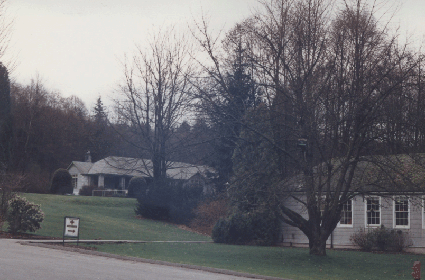
There was lots of room between pavilions.
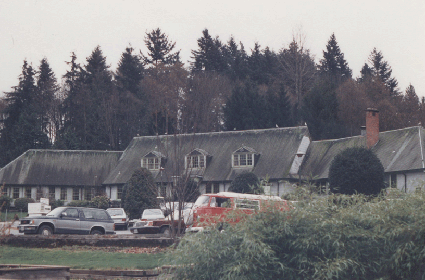
The original George Derby Centre was built in 1946 as a rehabilitation centre for disabled veterans returning from the war. Named after George Cleveland Derby, a First World War veteran who was awarded the Order of the British Empire for his patriotic and philanthropic work, the facility provided a home for veterans and assisted their return to community living. The original centre was a fenced compound, nestled in a large tract of woodland, and comprised of a series of buildings surrounded by spacious grounds, which encompassed gardens, fields and horseshoe pits. The buildings were connected by paved pathways, and the stroll between each one was picturesque and enjoyable.
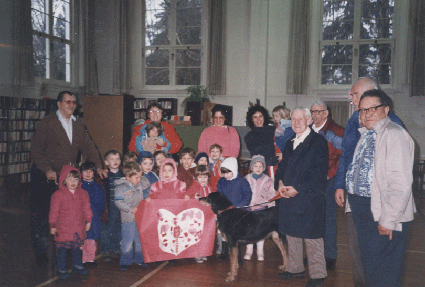
The preschool comes to visit. Standing below the lofty windows in the old auditorium. That’s Jimmy holding onto Beanie’s leash.
There was an administration building, which contained a vast, high-ceilinged auditorium for special events, and a games room with full-sized snooker tables. There was a separate crafts building with equipment for pottery, painting and weaving. Then there were pavilions with the living quarters for the men. These resembled army huts. The men’s rooms, screened off by curtains, stretched along either side of a corridor that ran from one end of the building to the other. The layout made it ideal for Pets and Friends visiting, since Beanie enjoyed a run in the woods on her way to the centre, and once there, had ample outdoors time between buildings. The pavilions made for easy visiting too, as we could come in one door, proceed straight down to the exit door and see all the residents along the way.
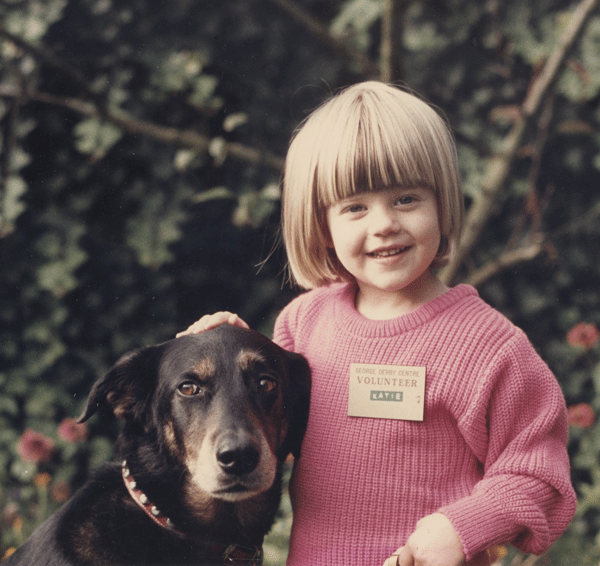
Katie and Beanie
We were quite the hit on our visits, because those who loved dogs were delighted to see Beanie, but others were thrilled to talk with Katie, who seemed to assume that she had acquired a vast number of additional grandfathers. Considering the indulgent way the men treated her, it wasn’t such a bad assumption. On her third birthday, she proudly brought her new Barbie doll to show the men, and when we returned to the administration building at the end of our visit, we found her stroller decorated with Happy Birthday balloons.
Caroline, Katie and Beanie with Mr. Trythall
Both my daughters enjoyed talking with the veterans. Katie was refreshingly direct with them, and would begin conversations with amputees by saying, “That bad owie.” Caroline, who was already in grade one, only got to come along on professional days, but she would roar through enthusiastically, insisting that we had to talk to everyone, even if she had to wake up the ones who were having a nap. We referred to her as “Shake and Wake Caroline” and the staff decided she had the makings of a good nurse.
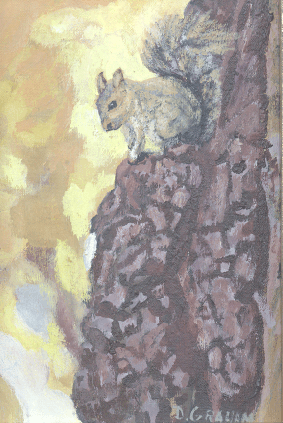
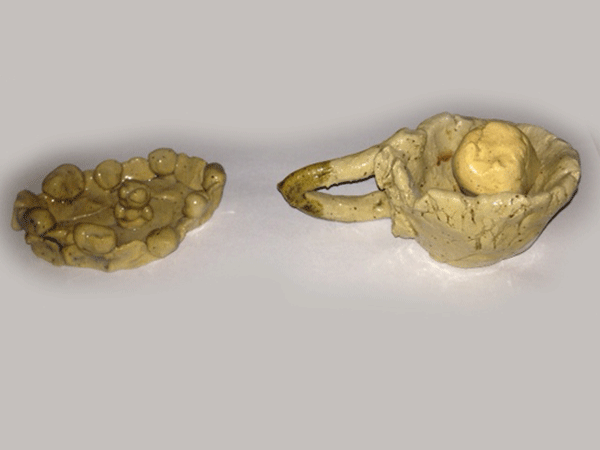
Don Graham’s squirrel that hangs in my study.Caroline’s ‘Snowman in a Swimming Pool’ and Katie’s ‘Teacup’.
Both girls were fascinated by the craft rooms. They tried pottery with Stan, discussed painting with Mr. Graham, and learned about weaving from Homer or Gerry, the latter, a quietly charming man who had survived being a POW in a Japanese camp. Jimmy and Scotty were also favourites, always with candy in their pockets for the girls, cookies for Beanie, and lively anecdotes for me, although Jimmy would occasionally elicit scowls from Katie when he greeted her with a boisterous rendition of “K-k-k Katie, beautiful Katie!” The men’s stories were as varied and fascinating as their experiences. One handsome, upright gentleman, whom I’d assumed was only in his seventies, turned out to be a veteran of the Boer War! Our visits were educational for me, as well as for the girls: a wealth of information from the livelier residents, and a lesson in the importance of patience and compassion from those who were not in good health or who had trouble communicating.
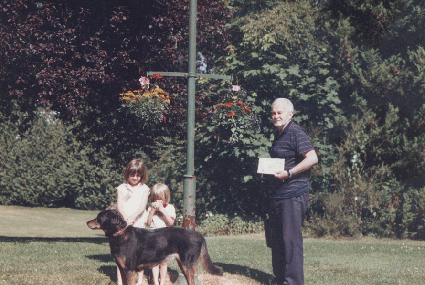
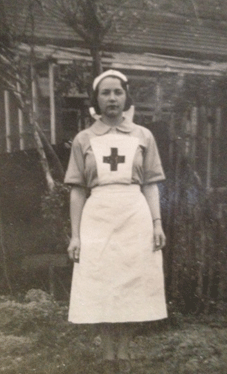
Many years later with Katie and Beanie on the old hospital grounds..Olive French in VAD uniform during WWII
Over the years, our whole family got to meet the men. My mother had been a VAD in London during the Blitz, so she was welcomed warmly when she accompanied us. If I brought Hugh along, he would head for the snooker tables and enjoy a game with the resident pool sharks. Glossy, black Georgina even got in on the act, coming along one Halloween when the girls and I were dressed as witches. Beanie looked cute in her cat hat, but we needed a real feline to complete our ensembles. The men enjoyed having a visiting cat, even though Georgina was indifferent to their attentions, being more interested in the abundance of fish tanks around the facility.
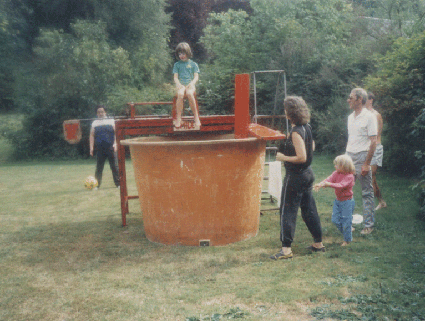
Caroline tried everything, even the dunk tank, on Sports Day.
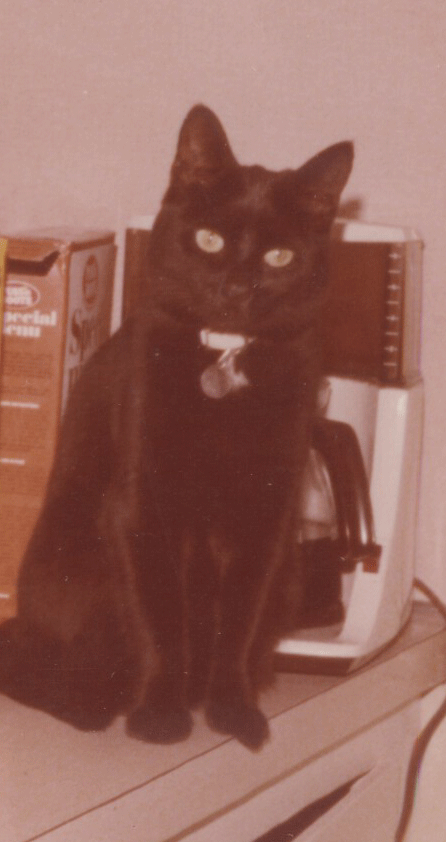
George came to visit on Halloween.
We loved the special occasions. Sports day was a riot, with a BBQ lunch, a dance in the auditorium, an Olympic torch, and Frisbees and lawn darts taking the place of discus and javelin. Caroline, always ready to participate, teamed up with Stan, holding his stick while he threw his dart, then returning it to him so she could take her own turn. Having tried every event, she then volunteered to sit in the dunk tank, and swam around like a little fish every time she was knocked in.
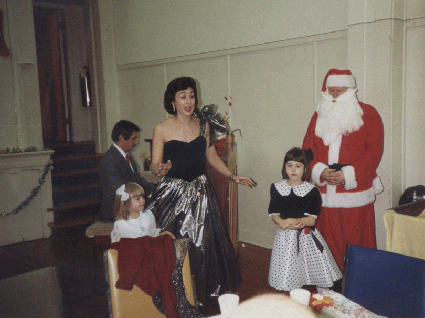
Santa is watching you!
Also great fun were the tea dances, where all the old favourites from WWII were played. The men gallantly took turns holding Beanie so that the girls and I could dance with them, and Caroline and Katie often helped to serve the food. The girls were happy to sit with the men and supervise Beanie if I was asked to sing—except for one memorable Christmas party when Caroline decided she wanted my attention mid-number and Santa had to come to the rescue to prevent me from being distracted. I still cherish the Santa-is-sternly-watching-you photo that one staff member took on that occasion.
Friends from the old centre.
The move to the new centre in 1987 was a mixed blessing. There was no doubt that the new facility was going to provide far better personal quarters for the men, for now they would have individual rooms in a proper residence. The downside was the loss of the vast parkland, smaller communal facilities, and a much larger number of residents. Even though most of the men were looking forward to the move and considered the new facility long overdue, many suffered anxiety over the change, and it was sad reality that several men died during the year of the transfer. One week, we ended up making our visit at Shaugnessey Hospital in Vancouver, because so many of our friends had been transferred there due to ill health. It’s a mark of their strong personalities that I can still visualize those men, even after so many years: Mr. Dundas, a thin, quiet man who always seemed pleased to see us; Lionel who said very little, but never failed to slip Katie a sweet; friendly Mr. Bell, who would engage Katie in earnest conversation; Howard, the one black resident, a sad, troubled man who never talked, but who always reached out to pat Beanie when we stopped to say hello; and John, an odd little man with a puckish face and spiky hair, who had up and down moods that made me unsure whether he wanted to see us or not, yet who always had something for Katie, as well as for Beanie. After John died, I was informed that he had referred to Katie as his granddaughter. There were sad times at the centre alongside the good times, and the year of the move was one of many losses.
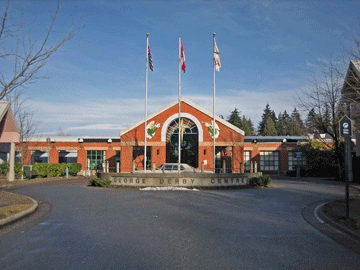
The New George Derby Centre
From the perspective of a visitor with a dog, the new facility seemed busy and bustling, and locating our friends was more difficult. Beanie, who was aging, was visibly tired at the end of our visits, especially as there were so many more residents who wanted to see her. However, she valiantly persevered, although, as her health declined, I had to limit the time she spent there. We continued for another two years at the new centre, but I finally had to retire her. It was timely. Our wonderful volunteer supervisor, Shirley Conlon, who had initially welcomed us to the centre, had now retired, and most of the men we had befriended in the early years had passed on. However, one of our favourite veterans was still there. This was Joe, an active WWII vet who looked after the unofficial resident cat, helped out at events and always had the inside story on what was happening. Joe was the veteran who had arranged for us to bring our early production of Babes in the Wood to the Derby Centre, and he had been in proud attendance, some years later, when we brought the show to the Shadbolt Arts Centre. Joe and I had kept in touch, on and off, after I retired as a volunteer, and he was disappointed to hear that my new dog did not have the temperament to take over where Beanie had left off. However, even if Max was too boisterous and unpredictable to be a Pets and Friends dog, I decided the least he could do was go round to meet Joe.
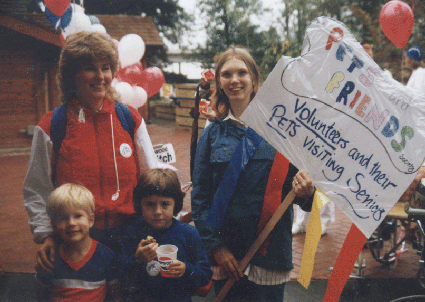
Promoting Pets and Friends. Caroline amid preschool friends and volunteers.
I phoned Joe to arrange our visit, not just to discuss a mutually convenient time, but also because I could no longer march through the main entrance, given that Max was not an approved visitor. The staff at the new centre was very picky about things like that, and one bossy supervisor in particular had made it quite clear that dogs weren’t welcome on the property unless they were part of the facility’s programming. Joe was delighted to hear we were coming, and he proceeded to plan our visit like a military operation. The war vets were great fun that way. Circumventing the rules and getting one up on the staff was a prime entertainment. Whenever the fire trucks roared down 16th Avenue, we always figured it was just one of the vets smoking in his room again, and I always got a laugh out of the notices on the bulletin boards, such as directives banning speeding in the corridors with the wheelchairs. Since Shirley Conlon was no longer there to vouch for us, I agreed with Joe that discretion was called for. He assured me there would be no problem as he had a corner room next to an exit that was screened from the front entrance.
The old grounds were overgrown by now.
On the day of our visit, I walked Katie to school, and then continued on with Max until I reached the woods. The new hospital had been built adjacent to the former one through another land exchange, and the housing developments slated for the old grounds had not yet been started, so much of the surrounding forest was still in place. The fields also remained, although now overgrown into rough meadows. Below the old grounds, trails stretched down to the Freeway. This woodland was another area that nature had reclaimed, for in the early part of the last century, houses had stood there. The trails were reminiscent of a deserted village, with the odd apple tree, building foundation or lamppost emerging from the ground cover to remind walkers of what had gone before.
A run on the old grounds to burn off some energy.
It was a bitterly cold day, and I wanted to burn off some of Max’s energy before we reached the Derby Centre, so we took the long route around the trails. We emerged from the woods at the point closest to the corner where Joe’s room was situated. I leashed Max, avoided the driveway, and strolled across the grass. Then I knocked on Joe’s window, and he slipped round to let us in the side door. Joe was delighted to meet Max, and Max seemed equally delighted to make a new friend. He settled happily in Joe’s room, probably encouraged by the fact that Joe still had the cookie box that Beanie had loved so much, not to mention the elusive smell of cat that hung in the air. Joe assured me that the cat would stay in hiding until Max left, and he gave Max treats and made a big fuss of him. Then Max, reverting to best-boy-in-the-class, sighed, flopped onto his side and promptly went to sleep, thus enabling me to have a cup of tea with Joe and a lovely reminisce about old times.
Joe had helped us bring Babes in the Wood to the veteran’s centre.
When Max woke up, he was still in ho-hum mode, so Joe urged me to try taking him out into the corridor so the other men could see him. Apprehensively, I agreed, and keeping a watchful eye out for roaming staff members, we ventured forth and took Max to see some of our old friends. To my delight, Max behaved in exemplary fashion. All those men, and not a single cower! Max might be racist, sexist and anxious, but obviously war veterans were exempt from his prejudices. The men seemed delighted to see us. Mr. Brady, another of our old favourites, sent me home with chocolates for the girls, and Murphy, who had never been that partial to dogs, beamed when we appeared. It was a lovely afternoon. I had a sense that Beanie was trotting along beside us, perhaps because she was so dearly remembered by the men. So, egged on by a contingent of vets with a we-didn’t-take-on-the-Germans-just-so-we-could-wimp-out-before-a-bunch-of-government-employees attitude, we made our way through the northwest wing. However, I didn’t want to push my luck, so once we reached the next exit door to the garden, we said our farewells and headed for home.
Max had to find another purpose.Pets and Friends was right up Beanie’s alley.
That afternoon with Joe is a very special and treasured memory. Sadly, because of Max’s increasingly unpredictable nature, I was never able to make him a regular visitor at the centre, even though he had managed well on that first occasion. Pets and Friends was not for him. It was Beanie’s job, an activity that made her feel important and gave her a sense of purpose. Max needed a sense of purpose too, but it wasn’t going to develop through any of the traditional programs. However, he was going to find his niche; it was just going to take a very different turn.
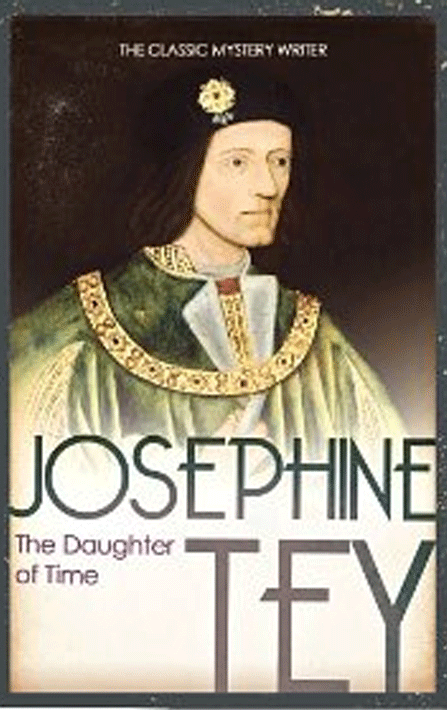
I’ve always enjoyed mysteries with historical settings, so I am always quick to buy when a new offering appears from writers such as Anne Perry, Charles Todd, Laurie King or Barbara Cleverly. However, I’m even more intrigued by stories where a modern-day protagonist attempts to solve a mystery from the past. This enthusiasm was triggered many years ago when I read Josephine Tey’s novel, The Daughter of Time, which deals with the mystery of the princes in the tower and asks the question: Was Richard III really guilty of murdering the children? The question has been in the news again with the discovery of Richard’s skeleton, and anyone who wants to study a case made against the Tudors would certainly be interested in the argument laid out in Tey’s novel.
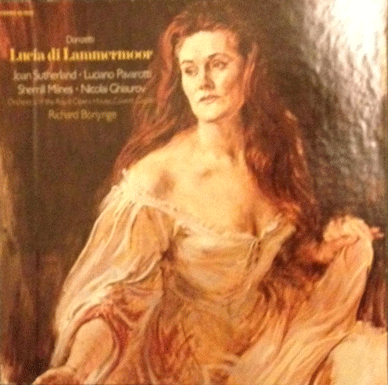
Many mystery writers use plots that are driven by puzzles from the past. I recently discovered the books of Kate Ellis, who makes the past/present theme an integral part of her series, for she has a detective solving modern mysteries while his archeologist friend unearths historic parallels. But long before I came across the Kate Ellis series, I was planning stories for my third book, The Beacon, and it was the example set by Josephine Tey that inspired me to write a mystery story in a similar vein. However, because my books have a heroine who is a singer, I wanted to find a historical mystery with an operatic connection, and I found that connection in Donizetti’s Lucia di Lammermoor.
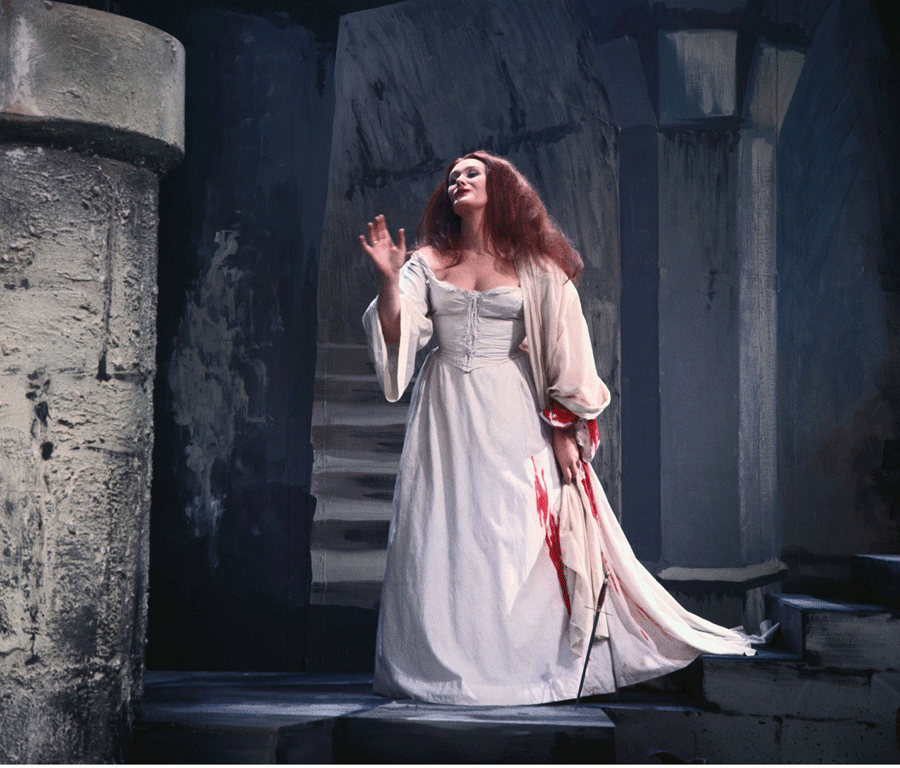
Joan Sutherland as Lucia
Lucia di Lammermoor is a superb role for a soprano. The music is beautiful, the singing is virtuoso, and the dramatic opportunities surpass most other roles in the coloratura repertoire. Lucia, duped into believing that her lover has abandoned her, is forced into a loveless marriage. When her lover shows up at the wedding and berates her for her infidelity, Lucia is driven mad. On her wedding night, she stabs her husband to death, and, in her bloodstained nightgown, descends back to the wedding feast where she sings twenty minutes of spectacular coloratura before collapsing and dying in grand operatic fashion.
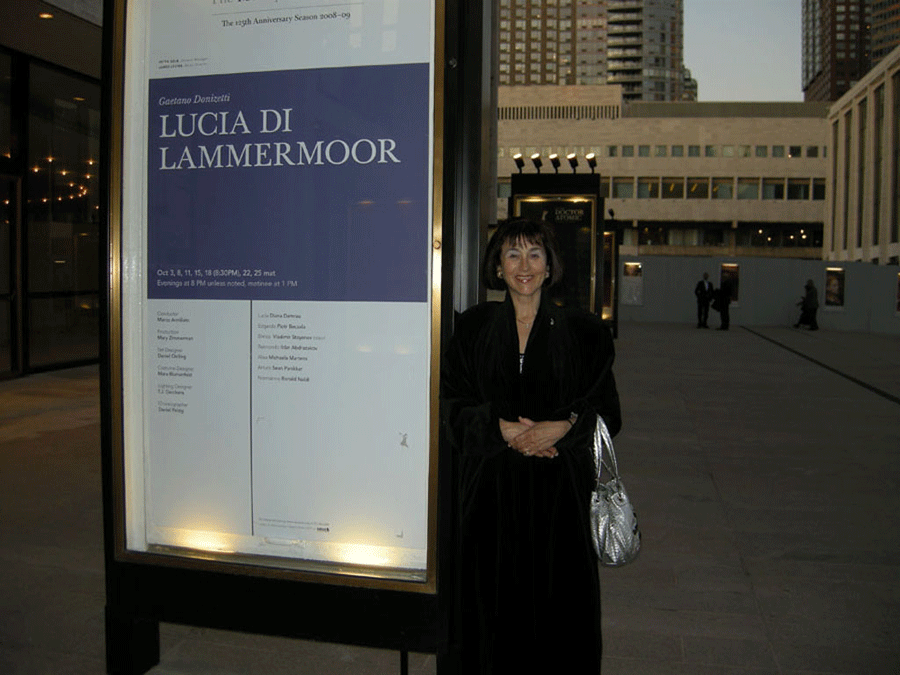
Lucia is the role that turned the great Australian soprano, Joan Sutherland, into an international star, and the first time I ever saw Lucia, it was with Sutherland in the role. It was a breathtaking and memorable performance, and one I never thought I would see matched again. Subsequently, I enjoyed other Lucias, and sang in the chorus of one Vancouver Opera production, but nothing matched my memories of that first performance. However, two years ago when in New York, I saw Diana Damrau in the enchanting Metropolitan Opera production, with its Victorian setting and magical enactment of the ghostly lovers in the last act, and once again, I was thrilled to the core by Donizetti’s glorious work.
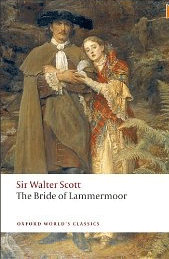
Scott’s The Bride of Lammermoor
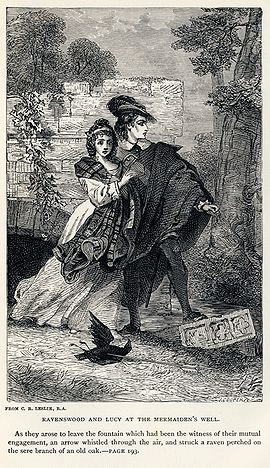
Donizetti’s opera was based on Sir Walter Scott’s novel, The Bride of Lammermoor. In Scott’s novel, Lucy does not make a blood-soaked entrance into the wedding feast. Screams are heard inside the bedchamber, and when the room is entered, her bridegroom is discovered bleeding on the threshold while Lucy, in her bloody nightgown, is gibbering madly, crouched in the corner of the “great old-fashioned chimney” of the room. Lucy falls into a delirium and dies the following evening. The bridegroom ultimately recovers.
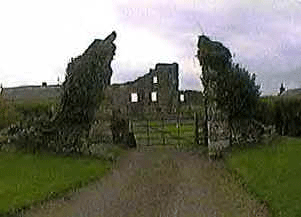
Baldoon Castle
The novel, like most of Scott’s writing, was based upon an actual historical event. The real Lucy’s name was Janet Dalrymple and she is still supposed to haunt Baldoon Castle in Scotland. If one reads the prologue to Scott’s novel, or the varying versions of the tale that abound on the Internet, the facts that emerge are different yet again—and not only different, but inconclusive. Therefore, once I read Scott’s prologue and researched the story of Janet Dalrymple, I discovered my mystery and was able to embark on my story.
“Who Killed Lucia” is from The Beacon and Other Mystery Stories.
My heroine, Philippa, like Tey’s hero in The Daughter of Time, was bored and miserable. In Philippa’s case, depression was the result of a broken romance and a dose of the flu that had forced her to drop out of the opera chorus for an upcoming production of Lucia. Philippa’s father, Bertram Beary, brings her Scott’s book to cheer her up. Once he points out that, contrary to the events in the novel, Janet Dalrymple died and her husband survived, Philippa’s interest is caught, especially when she learns that the husband refused to divulge the details of what happened and took the secret with him to his own grave thirteen years later.
Since I did not want to write a story that sounded like a research essay, I needed a modern case for Philippa’s detective brother to solve—and it had to be one that resonated back to the older mystery. The tragedy of Janet Dalrymple resulted from an arranged marriage, which ultimately became a forced marriage. Therefore, it was easy to find a modern parallel, for this is another subject that frequently makes the headlines. A wealth of information was available, and I received assistance from a variety of sources, even being presented with a book on Sikh customs by our friendly taxi driver in New York. Many South Asian women are now speaking up about their rights, and publishing books and articles about their experiences. One of the most fascinating accounts I read recently was Unworthy Creature, the book National Post columnist Barbara Kay co-authored with Aruna Papp, and I’m sure many more such accounts will be written as women from other cultures continue to strive for independence.
At the Lincoln Centre where the magic came alive again.
But back to the mystery of Janet Dalrymple. As Philippa embarks on her historical project, DI Richard Beary is called in to investigate a double stabbing at a Sikh wedding. The two parallel cases continue throughout the story, until finally, Philippa and Richard meet at the opening night of the opera. Here, they discover that the mystery from the past and the mystery from the present result in the same solution, a solution, by the way, that makes perfect sense based on all the details and evidence in the prologue to The Bride of Lammermoor. I hope those of you who read the story will agree that Philippa’s conclusions have merit, for there is nothing more satisfying for a mystery writer than to feel that one has really solved a mystery. Yes, it was great fun combining sleuthing with creative writing. No wonder “Who Killed Lucia” is one of my favourite stories!
From WHO KILLED LUCIA
Beary dove into his bag and pulled out a large, utilitarian-looking paperback. “Here, I brought you something to occupy your mind. A work of Sir Walter Scott to put your romantic trials and tribulations into perspective.”
Philippa studied the book in her father’s hand.
“The Bride of Lammermoor. You know, I’ve always thought it would be interesting to read Scott’s original story. Does the opera follow it closely?”
“There are similarities,” said her father. “The family feud, and the concealed letters to make the lovers believe that each has forgotten the other—but the villain in the book is the mother, not the brother. Plus there’s a ton of other stuff . . . background on Scottish politics and how the feud developed. It’s quite fascinating. But what you’ll find really intriguing is the fact that Scott based his novel on a true story. The prologue talks about the history of the real Lucia. Her name was Janet Dalrymple. Your operatic heroine really existed.”
Philippa’s eyes widened.
“And did she really go crazy and attack her husband on their wedding night?”
“Read it for yourself,” said Beary. “The most interesting detail is the fact that the husband survived.”
“Why is that so interesting?”
“Because Janet didn’t. She died two weeks later. Nobody really knows what happened. Scott tries to explain it in his novel, and he may well have reconstructed everything accurately, but the reality is that he was just speculating from stories that had been passed down through the generations by people who were related to the family of the bride. And since he was writing in the early 1800s and Janet Dalrymple died in 1669, there was a lot of time for the stories to become distorted.”
“Are there no records? Surely the husband had something to say after he recovered?”
“No,” said Beary. “He refused to say anything, and he banned anyone from enquiring how he had received his wounds.”
“Really?”
“Really.” Beary planted the book in his daughter’s lap. “In the final analysis,” he concluded, “it’s a mystery.”
Max’s first few days with us had been deceptive. As he’d arrived on a Monday, he was introduced to a household where three of the four humans were out during the day so that many hours were spent having quiet time while the lady of the house did chores or worked on arts projects. He had a nice outing in the morning when we walked the girls to school and continued on for an amble in the park. Once the girls were home, there’d be some playtime, but even that was limited as both girls took dancing and gymnastics, and Caroline was heavily involved in figure skating, so often as not, Max’s after-school activity was to hop in the car and ride along while I delivered the girls to their classes.
Caroline was a lovely figure skater.
If he was lucky, the activity of the day was at the Totem Figure Skating Club. Then he would get a bonus walk around Queen’s Park while we waited for the session to be over. He particularly liked the smells by the petting zoo. Based on how well Max coped with those first few days, I’d assumed that he was going to settle down to become a best-boy-in-the-class, good-natured companion.
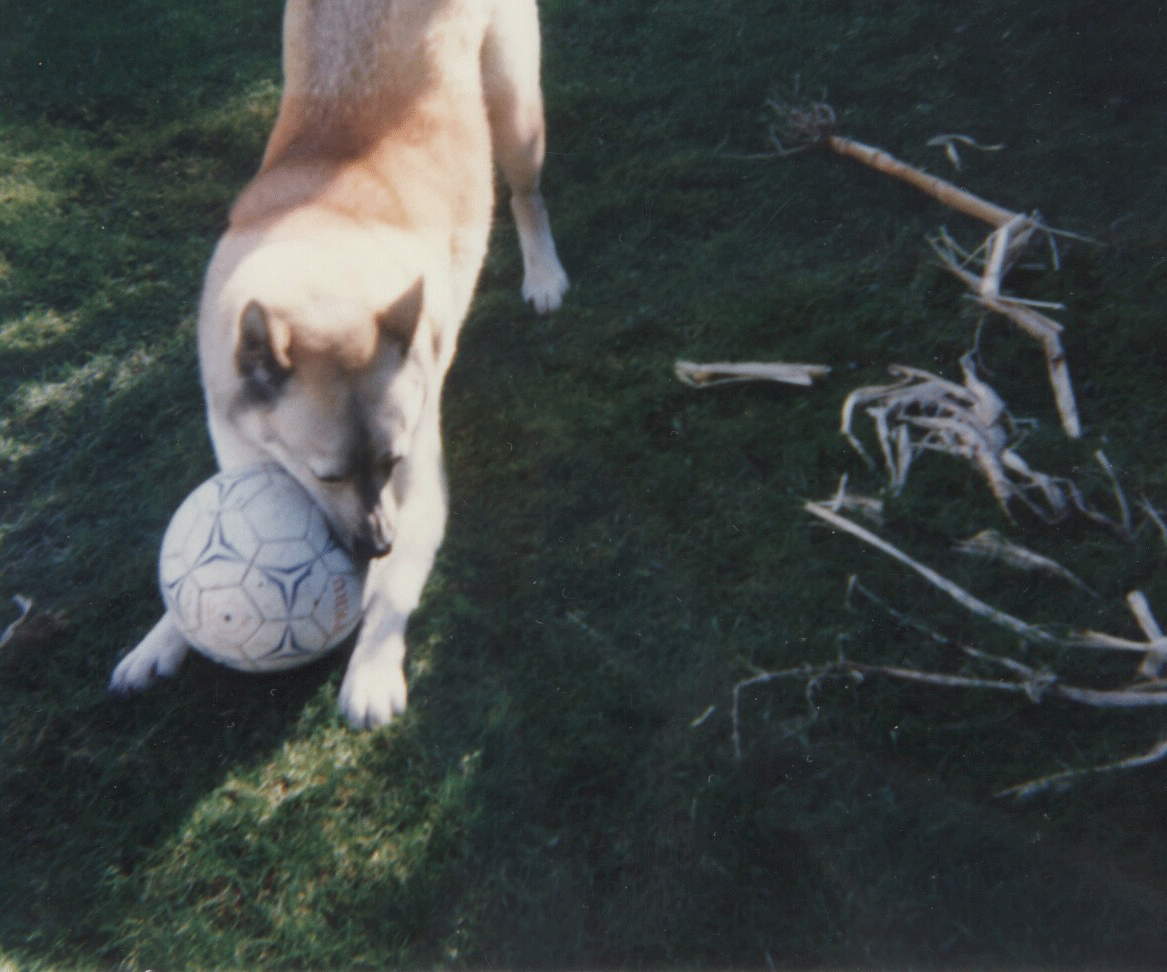
Soccer balls did not last long.
But then came the weekend. Max, I discovered, was only good as gold when temptation did not fall his way. Once all the gang was home, best-boy-in-the-class became hell-raising-class-clown-with-an-attitude. A walk and a play didn’t tire him out; he just wanted more. As the day wore on, he became thoroughly naughty, dumping my vase of roses, ripping up his soccer ball, jumping on the bed and chewing the dowels on the kitchen chairs. He was so excited having everyone round all day that I had to forcibly isolate him and make him take a nap. It was just like having a naughty toddler again.
The steam engine.
On Sunday morning, we took Max for his first off-leash walk in the woods. He had a wonderful time, racing around on his stubby legs and getting wild-eyed with excitement, but trying to settle him down afterwards was like trying to stop a steam engine under full throttle going down a 90% gradient. He puffed all the way home, still emulating a steam engine. I was merely the caboose on the other end of the leash, probably causing him to work a bit harder, but certainly not having much control over his progress. That afternoon, Katie had a friend over to play, and between them, they got Max thoroughly over-stimulated by setting out a mini-gymkhana in the garden and encouraging him to roar around the course jumping the hurdles. Later, he was still hyperactive, so I took him for a stroll through the George Derby Lands. Nothing seemed to tire him out. As long as we were up and about, he wanted action. I was very relieved when Monday came round and we were back to the quiet routine. However, having had a taste of whoopee, Max’s guarded observation of me had taken on a new aura. A question hung in the air: “When does the fun start again?”
Stubby legs flying at top speed.Tootsie.
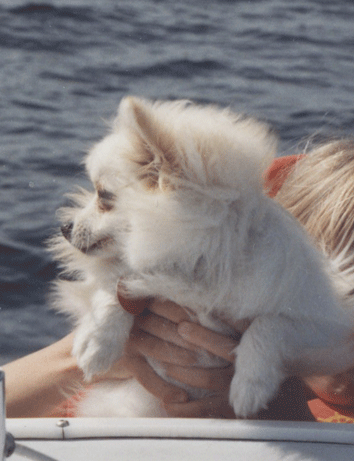
The following weekend, some friends that we knew from Pender Harbour came to visit. The Whittakers owned a tiny ball of fluff called Tootsie. This little Pomeranian was not impressed with Max, but he was fascinated by her. In the interests of canine bonding, we took them to the park together. Max bounded all over the place, showing off, obviously trying to impress, but Tootsie decorously trotted alongside the humans and ignored him. Once home, Max was still determined to play, so much so that we were afraid he would sit on Tootsie and squash her. Finally, we had to place him on the far side of the living-room door, where he sat with his black nose flattened against the glass panes, the wild eyes tracking Tootsie’s every move. It wasn’t until close to the end of the visit before Max calmed down enough that we were able to settle both dogs in the same room.
Max frequently chose to weigh his options.
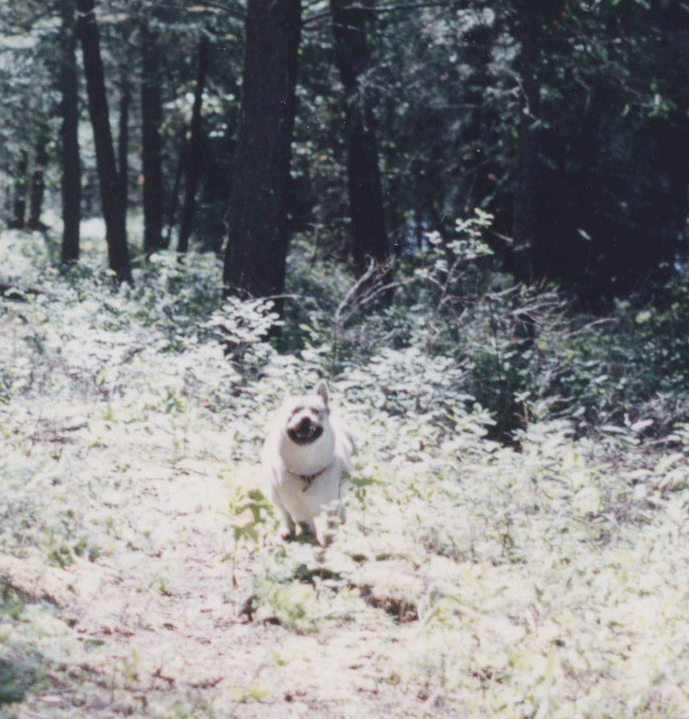
On the Sunday, during his off-leash romp in the woods, we met a lady with a small white dog. Whether Max mistook the dog for his would-be lady love of the previous day, or whether he just wanted to make a new friend, he took off after the woman and flatly refused to come when he was called. When I say ‘refused’, I mean ‘refused’, and not simply that he was too excited to hear me, because he looked back at me, sized up the alternatives, and then made a conscious decision to run the other way. The owner of the other dog kept power-walking on her way, clearly contemptuous of the incompetent dog owner at her rear, and I had to jog half a mile before I could catch her and corral my misbehaved mutt. It was quite apparent that Max was no longer getting a gold star for behavior, but it was equally apparent that I was flunking dog ownership. I had a dog that I couldn’t train. For the first time in all my dog-owning years, the words, ‘obedience school’, started to slip into the conversation.
Max settled in very quickly. Those first few days, he was good as gold, other than minor misdemeanours like stealing my dusters when I was doing the housework. He also made one tentative chew at the Queen Anne leg on our wing chair, but having been chastised and given a rawhide bone, along with an explanation that this was what he chewed when he wanted to exercise his jaw, he never touched the living-room furniture again. He was still very young, and in puppy mode, but he was cooperative. However, I had the sense that he was ever watchful, trying to assess and figure out his new household. Knowing his troubled history, and ever conscious of that wild glint in his odd-coloured eyes, I wanted to do all I could to turn him into a happy, well-socialized household pet who could interact with family and visitors without tension or anxiety.
We found several opportunities for socializing that first week. Max’s first outing was a trip to the vet for his shots. He cowered abjectly when he got inside the surgery, but he bore his shots manfully and made friends afterwards when Dr. Zinger offered him a tidbit. Max and Dr. Zinger were to have a prolonged association over the next few years—we used to say Max had been a major contributor to Dr. Zinger’s retirement—so it was just as well they established a good rapport early. Dr. Zinger was a wonderful man, dedicated and kind, and the care he showed Max was far beyond the call of duty. Max never liked going to the vet, but he seemed to understand that Dr. Zinger was there to help him. Dr. Zinger was definitely part of Max’s ‘Inner Circle’.
Young Max was a little ham who loved having an audience.
Max tolerated his visit to the vet, but he loved his next outing. I took him with me when I went to city hall to purchase his dog licence. He trotted beside me up the stairs, looking very cute in his new red collar and walking on his leash in exemplary fashion. He waited patiently for the people in front of us to be served, and as soon as we reached the front of the line, he stood up on his stubby hind legs, put his front paws on the counter and peered at the lady on the other side. Her ‘Oh’ of delight caused his tail to wag a mile a minute. There was a bit of a ham inside that husky body and his performance that day was a precursor of things to come. The licencing department ground to a halt for several minutes while all the clerks made a great fuss of their four-legged visitor.
Katie in Grade 3
Max’s third outing brought him even more adulation. Katie, who was in Grade 3 at the time, liked to come home for lunch, generally putting in a specific menu request before leaving in the morning. That particular morning, her order was not only for her special favourite, brie in filo pastry, but also a directive to have Max ready to go after we’d eaten as it was a show-and-tell afternoon. So after lunch, we walked Max to school to visit Katie’s classroom and Max dutifully ‘showed’ while Katie ‘telled’. He was moderately well behaved and very much admired.
Max’s predecessor, Beanie kicked up a fuss if she was home alone.
I was reassured by all these encounters. Max seemed to be a friendly little guy, especially around women or children, which was understandable given that it was the mother and the little boy in his first home who gave him love and attention. He was less relaxed around men, but as long as their manner was easy and unthreatening, he would make friends fairly quickly. I was also pleased to discover that Max was good if left alone when we went out. Unlike Beanie, who, in puppydom, had howled like a banshee, ripped up linoleum and torn down curtains if left unattended, Max simply lay down in the front hall, went to sleep and waited for us to return. In that one regard, he was definitely a Ho Hum Husky. However, my first venture out without him was a trip to Safeway, and when I returned, I was carrying bags of food which he found very interesting. Since he turned out to be a dog with an elephantine memory, perhaps he surmised that any excursions that excluded him were simply his owners going out for provisions.
The girls loved their new pet.
Having realized that he was in a household of loving adults and playful children, Max’s nervous mannerisms began to abate. Collars and leashes no longer bothered him; however, his earlier anxiety would still manifest in a variety of ways. He was the only dog I’ve ever known who had nightmares. Watching Beanie dream had been funny, for her whiffles and twitching paws signaled that she was having a wonderful time chasing squirrels and romping in the park, but watching Max dream was sad. He would often whine or whimper, and his body movements indicated distress. We also noticed that, whenever we were walking along the street and a smell of curry wafted over the air, Max would cringe and cower— and large men, particularly those with turbans, triggered growls and raised hackles. We appeared to have acquired a dog that was anxious, racist and sexist.
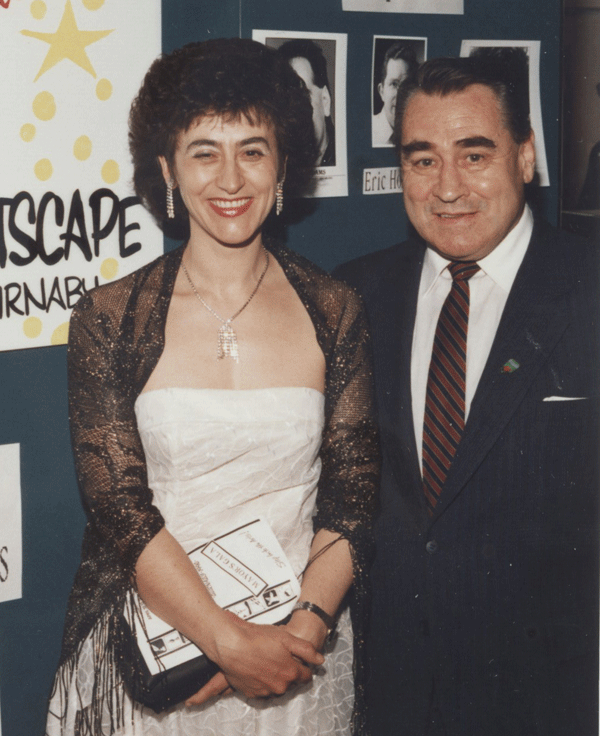
With Bill Copeland at Artscape
An interesting side note: since the late 1980s when Burnaby erupted into a huge controversy over dogs and off-leash areas—something I took great delight in fictionalizing in my story, “A Political Tail”—Burnaby has had a string of mayors who like dogs and who don’t hold it against me that I was christened “The Dog Lady” by the local press at that time. I never minded the dog-lady title—I was actually born in the Chinese Year of the Dog—and I had lots of discussions about man’s best friend with the various men in office. Gentlemanly Bill Copeland was a great supporter of the off-leash areas, and a cheerleader for my arts projects too. Doug Drummond, an enthusiastic dog owner himself, once informed me that, if there were such a thing as reincarnation, next time round he would like to come back as my dog. A chat with Doug’s successor, Derek Corrigan, revealed that he, too, owned a politically incorrect dog. Derek told us that he often had to apologize for his rescue dog’s overt displays of ethnic dislikes. Max was not the only racist canine on the block.
There is no doubt that Max’s first four months, like a baby’s first year, did a lot to determine his character, and no matter how well we treated him, there were some bad memories that were never completely eradicated. When those memories were combined with his alpha-male nature and his wolf genes, there was the potential for trouble ahead. We naively thought love would be enough, but we were soon to realize that training Max was going to be uphill work—and we weren’t going to be able to do it alone. Good as gold lasted about a week, but there were storms ahead.
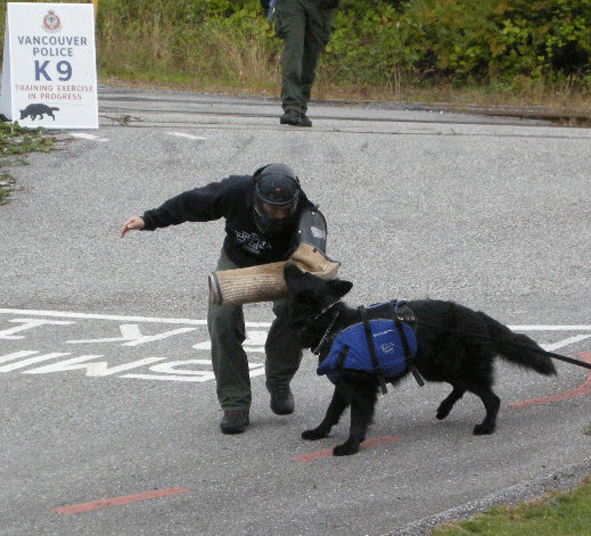
Reading the recent news about VPD Service Dog, Teak, who miraculously survived after being slashed by a criminal, reminded me of the wonderful service dogs we had the privilege to watch when I was researching a story for The Agatha Principle. Mystery writers always look for ways to garner information about police procedure, and my visit to the VPD Dog Squad and a subsequent opportunity to watch the team on a training exercise provided me with a wealth of fascinating information.
The service dogs, as we all know, are used for tracking, apprehension and identification of substances such as drugs or explosives. At one time, Labs were used as sniffer dogs, but they were phased out a couple of years ago; now sable, or black and tan German shepherds are cross-trained to handle all jobs. However, the Labs are still used for customs and excise as part of Canada Border Security Agency. Not every police force has its own dog unit. VPD has a large contingent of service dogs, and Port Moody has a small K9 team. However, Delta and New Westminster share a unit, and the RCMP has a mobile unit that is shared between Burnaby, North Vancouver, Coquitlam and Surrey.
It is well worth a visit to VPD’s lovely new facility off Terminal Avenue. The tour that is offered is interesting and informative, and it is great fun seeing the demonstration of how the dogs work. The VPD dogs are a European strain, but bred locally, and German commands are used in training them. Most are males, but occasionally a female is used, and the dogs stay with their handlers from puppyhood throughout their entire lives. Specialized trainers train the dogs, but the handlers are taught to work with them, and when the dogs are retired around 8 or 9 years of age, their handlers can buy them for one dollar. Once that dog is retired, the handler is also out of the dog squad.
Training for dog handlers is critical. Dog handlers are extremely vulnerable as their eyes have to be on their dogs much of the time and their hands are on a leash. Therefore, they may not be as quick to spot trouble, and in a sudden emergency, they cannot get to their sidearm quickly. Dog handlers are also often first on the scene so part of their training involves taking special race-car driving courses. The dogs ride in expensive Chevrolet Tahoes with climate control and refrigerated floors. The handlers are allowed to leave the engines running all the time when the dog is left in the car.
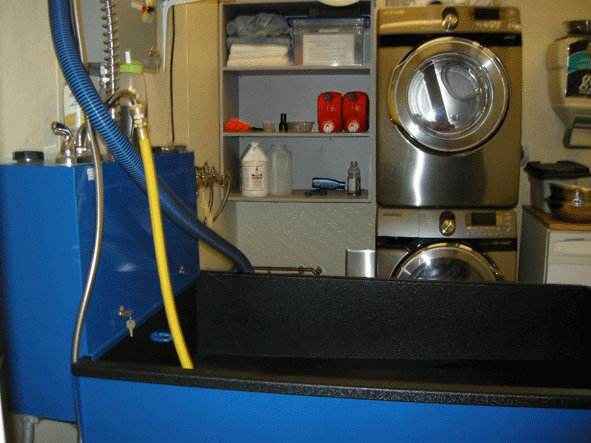
Like the cars, the VPD Dog Squad building is very impressive. There is a report room, a workout room, a food-storage room and a laundry/dog-wash/checkup room, the latter with a bath that every dog would envy, not to mention every human if you substituted moisturizers for flea soap. A flip of the dial produces soap, conditioner, flea soap, flea powder or anti-bacterial soap. There is also a flip-up counter for checkups and a scale to check the dog’s weight. In the hall, there is a notice board where handlers can leave instructions for their colleagues if they are going to be away and their dog needs care. Each dog has a large kennel with access to the outdoors. The K-9s are very well looked after, but so they should be. A row of photographs in the report room and a list of names at the base of the statue outside the building remind visitors of the wonderful dogs who have been killed in the line of duty.
The dog squad is a popular unit, so there are lots of applicants, and anyone who wants in has to spend some months as a ‘quarry’ before getting taken on. Being a quarry isn’t for the faint-hearted. When watching the demo on the training ground, we learned that the dog’s reward is the sleeve. Since the dogs are trained to go for the arm, the quarries wear a heavily padded detachable sleeve. We watched a handsome shepherd named Kane go through his paces, racing round the obstacle course, tail wagging and eagerly responding to his handler. When it came time for the quarry to appear, complete with padded arm, Kane was barking in joyful anticipation. In spite of his obvious enthusiasm, he waited patiently for the appropriate commands. The dogs are trained to sit and stay while the handler searches the quarry, and have to wait until they receive a command to apprehend. However, if the quarry moves during the search and there is danger to the handler, the dog makes its own judgment call to attack again. The dogs are also trained to listen to one person only, and are given exercises where they learn to ignore a command given by the quarry. Kane performed in exemplary fashion, and once he had successfully ‘apprehended’ and the demo was over, he got to play with the sleeve.
I got to meet a lovely fellow named Gus.
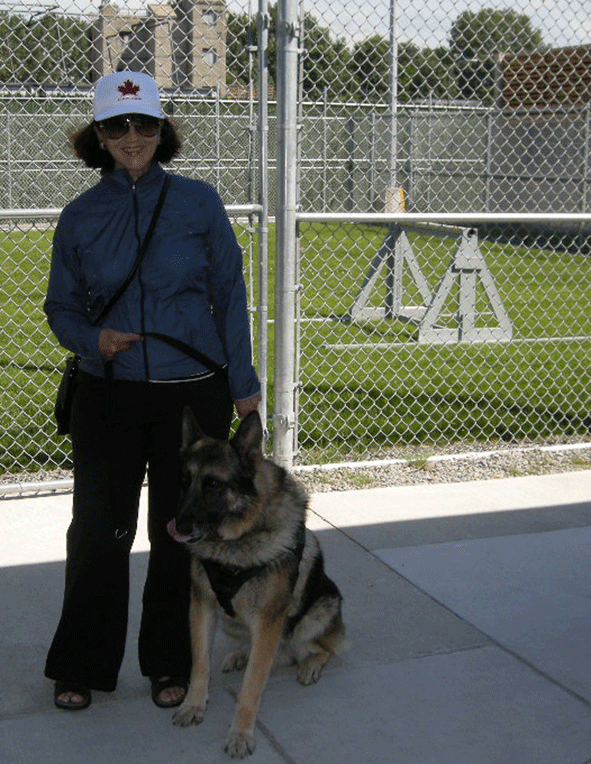
After the demo, when we mingled and talked, we were introduced to two of the dogs, one a puppy, still untrained, and one a lovely fellow named Gus who was close to retirement. The puppy had obviously been watching the big guys go through their paces, because he lapped up the pats and attention, but he wanted to chew non-stop on my arm.
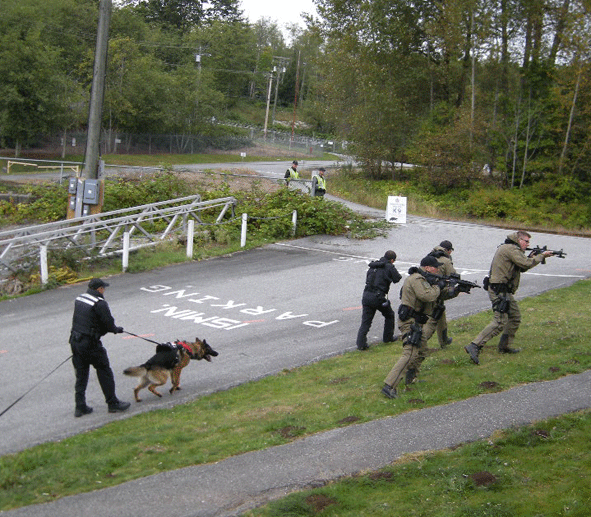
My second opportunity to see these great dogs in action occurred a few months later when my husband arranged for VPD to use the IOCO Boat Club for a training exercise. This exercise involved the Dog Squad with the Emergency Response Team, and each group was brought in on a rigid-hull inflatable, after which they had to act out scenarios which none of them knew in advance. Different formations were used for different terrains and scenarios, although the dog handler, being the most vulnerable, was always last off the boat and at the rear when coming up the dock. Caution seemed to be the foremost concern, and having seen the groups in action, I could understand why. However entertaining it was to watch the training exercise, the reality hit home. The police and service dogs have very dangerous jobs, and they can’t always anticipate when that danger will strike. I have a lot of admiration for those willing to take on the challenge.
The IOCO event enabled me to talk with trainers as well as handlers, and that was really useful, since the story I was researching involved sniffer dogs. Whereas other training doesn’t start until 15 months as it’s gruelling and hard on the dogs, sniffer dogs can start training as early as six months because they are doing fun stuff that pups enjoy. To train a sniffer dog, one sets out tubs containing different items. When the dog sniffs the item you want it to recognize, it gets taken outside for a game with a ball. Evidently one can train dogs to find anything. One female handler had a dog that got bored easily, so she hid items all over her lot while the dog was in its crate; then she turned it loose to track them. I was told that misbehaved dogs make good sniffer dogs because they love climbing all over things and ripping them up. So not only did I get the information I needed to finish my story, I learned all kinds of useful tips on dog-training. Of course, we’re a dogless household these days, given that Minx the Manx is elderly and deserves to enjoy her old age in peace, but the next time I acquire a dog of my own, I’ll be able to teach it how to fetch our slippers. Thank you Vancouver Police Department!
My Diary entry of January 27, 1993 wasn’t quite accurate. The family who owned Max lived in Queensborough, not Delta, but given the glazed state of my brain after weeks of preparing elementary school students for a puppet marathon, it’s hardly surprising that I had no idea which part of the Lower Mainland I was in.
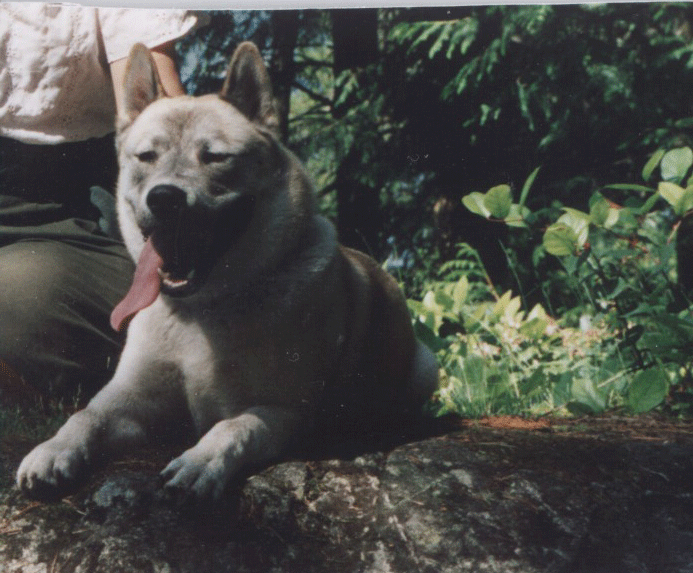
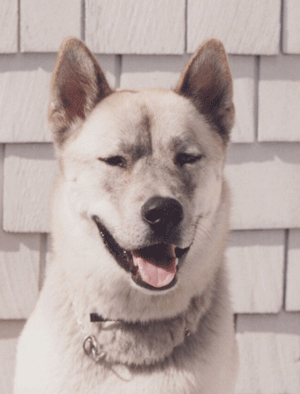
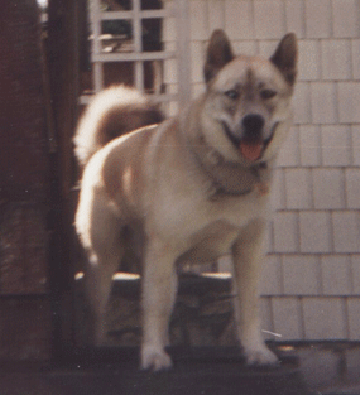
Max turned out to belong to a South Asian household. The lady of the house was charming, and she explained to us that although she and her son were very fond of the dog, the men of the household did not want him. I took note of a well-chewed ornate newel post at the foot of the staircase, which suggested one reason why little Max was not popular. Once Hugh and I had been introduced to the family, our hostess’s son fetched the young dog and brought him out to meet us. Max barreled over to me right away and seemed eager to make friends. Immediately, and with a tiny flutter of apprehension, I noticed his eyes—one blue and one brown—the mark of the Siberian husky. The eyes contained a hint of wildness in their eagerness, and after my experience with Lucky, I felt unsure of what lay behind them. Still, Max wiggled enthusiastically and wagged his tail a lot, both very good signs. We visited for a while, and then left, having asked our hostess to call us in a couple of days as we couldn’t proceed with an adoption until we had finished the puppet-show run.
Three-year-old Katie with Beanie – Pets and Friends volunteers. The war veterans loved them.
On the drive home, I expressed my concern to Hugh about the look in Max’s eyes. Hugh’s response: “He’s fine. I did the ‘Pets and Friends’ test on him. He didn’t bat an eyelid.” Since Beanie had been a Pets and Friends volunteer at the George Derby War Veterans’ Centre, I was well familiar with the test in question. While being screened for the program at the SPCA, the interviewer had trodden on Beanie’s back paw to see whether or not she would respond with aggression. Beanie, gentle creature that she was, had simply looked at him reproachfully with her big, brown eyes. Max, also, according to Hugh, had not reacted at all, if indeed he had even noticed. In hindsight, I realize that Max, when intent on a goal, did not feel pain and was oblivious to distractions, witness the way he would cannon into trees when chasing squirrels, and only stop momentarily for the spots in front of his eyes to clear before charging forward again. I’m convinced that Max’s goal at that point in time was to be taken home by the lady with kind eyes. Even at four months, Max had assessed me as a pushover.
The next day was Thursday, set-up day for the George Derby Centre show. That evening, Max’s owner called. It was not quite the call I expected, and suddenly I realized why the owners wanted a private adoption and why Max had not simply been discarded at the shelter. I was being asked to buy the dog. The situation did not feel right, especially since the initial contact had come through the SPCA. I reiterated that I would be willing to take Max and provide him with a good home, but that I was not going to purchase him. The following morning, I called Michael Weeks. Michael was horrified, and insisted that there had been no talk of money when he had been contacted. His understanding was that Max had to be given up and needed a good home. Michael had given out my name and number as someone who might be able to provide that home. He had no intention of being a broker for a private sale.
Babes in the Wood – the original poster photo.
I had little opportunity to reflect on the situation, because Friday was the day our troupe performed Babes in the Wood for the war veterans, after which, we had to dismantle everything and move the theatre to St. Alban’s Church. By Saturday, we were exhausted, but the children valiantly struggled through one last show for the church group, after which Hugh and I dismantled the set and brought everything home—everything except our daughters, that is—they were going to a sleepover at one of their friend’s houses. This was opportune, because that evening, I received another call from the lady in Queensborough. She had decided to give us Max. She told me she had a ‘good feeling’ about him coming to our home. I had mixed feelings, remembering those wild eyes, but my instincts told me that Max really did need a new home, and I resolved that we would try to provide it. Hugh and I decided to pick him up on Monday, during Hugh’s lunch break, so that his arrival would be a surprise for the girls.
Monday was busy. I went for an early walk with Hugh before he left for school. Then home for breakfast and to see the girls off for school. I rushed through the day’s chores, then headed out for my singing lesson, en route stopping at the Sun building to hand in our donation money for Canuck Place. After my lesson, I raced home to meet Hugh and we set off to pick up Max. His family was waiting and Max was ready to go. I felt sorry for the little boy who had clearly loved Max and was upset to lose him, and I tried to reassure him that Max would be loved and cared for. Max seemed happy to have a leash clipped on his collar and he trotted outside with us, hopped into the back of the wagon and settled down like the best boy in the class. He was a model of good behavior on the ride home, exhibiting the laid-back attitude that later earned him the title of Ho Hum Husky. I felt smug. Why had I been worried? This was going to be a model dog. Piece of cake. No problem at all.
As soon as we got Max home, Hugh had to leave to go back to school. Max and I went to the front door to see him off. What followed made me very thankful that Max now belonged to us. I went to take him by his collar, then realized that I could not get my fingers under it. The puppy collar had been left on and never adjusted properly as the dog grew. Max must have felt as if he was slowly strangling, a little more each day. I couldn’t begin to imagine the trauma he must have suffered. I called Hugh back to help me, and between us, we managed to get the collar off. As the rush of oxygen went to Max’s brain, his whole system seemed to go weak. His eyes rolled, and the next thing I knew, he’d deposited a big pile on the hall carpet. Poor Max. He really had needed to be rescued.
Hugh went back to school, and I spent the afternoon acclimatizing Max to me and me to Max. He seemed to be a good-natured little guy—at four months more of a knee-socks than a puppy—and very sturdy. With short legs and a barrel chest, he was almost as wide as he was tall. Even though he was young, there was a sense of watchfulness about him. Every interaction gave me the impression that he was sizing me up. He liked being patted, but I soon discovered that he had a spot on his side that was extremely tender. Later, we noticed that he was nervous when Hugh picked up a newspaper, so he had probably been beaten with a rolled up paper. When I went to put a collar or chain around his neck, he ducked and showed fear. However, when I stroked him and made him sit, he finally allowed me to loop on a chain and leash him, and once outside, he was happy again, walking beside me and sniffing at all the new smells along the way.
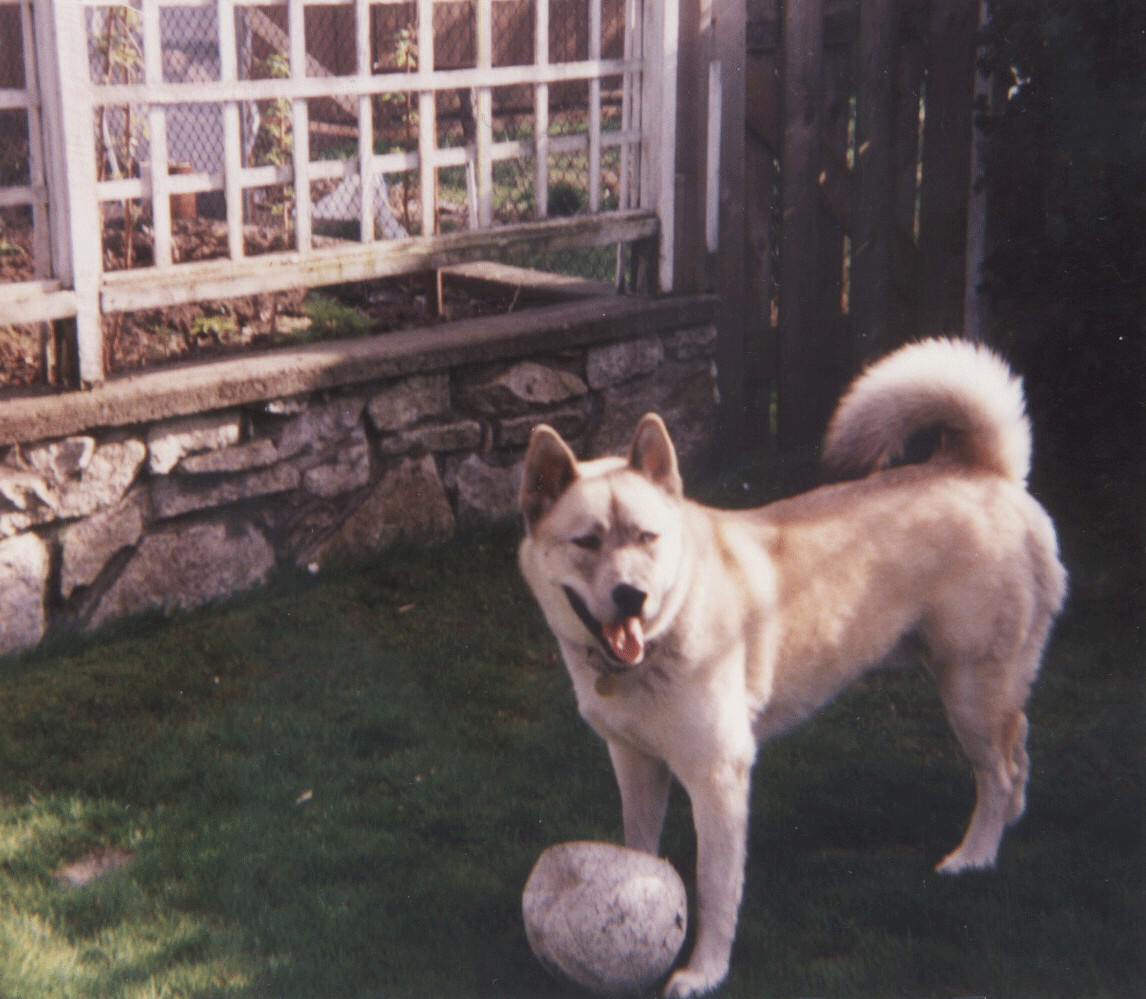
Max had a lifelong love affair with soccer balls – something that carried over from his fun times with the little boy who first owned him.
Our arrival at Second Street School was a great success. Caroline’s class was in a portable, so the children had direct access to the playground. Her teacher was Nancy Ebert, who I knew from my affiliation with Vagabond Players. Nancy was as wonderfully disciplined as an actress as she was as a teacher, and both my girls adored her. However, her patience was tested when Max arrived. The moment one student caught a glimpse of Max sitting patiently beside me in the playground, the buzz went round to the entire class, whereupon the portable emptied as the children rushed to meet Caroline’s new pup. Miss Ebert came to the door and called everyone back until dismissal, but I noticed she had a big smile on her face, and in time, she became great friends with Max too. Once the bell went, Max’s new fan club poured into the playground and surrounded him. He promptly ate one of the children’s sandwiches, and then attempted to steal another child’s soccer ball. When Katie’s class arrived, he kept an eye out for more treats as the second batch of children fussed around him.
On the walk home, he trotted beside the girls, perfectly happy as they traded him back and forth. Once home, he wolfed down his dinner, dutifully did his business outside in the garden, and settled down at bedtime on a blanket in the corner of our bedroom. I still could tell that he was watching me constantly, but whether he was trying to read my signals in order to be obliging, or whether he was trying to figure out what he could get away with, I was not sure. However, when I patted the blanket and said, “Head on pillow,” he obligingly flopped on his side and dropped his head. Then he slept through the night without a whiffle. No snores, no more accidents, and I was even getting used to his odd eyes. He definitely wasn’t my cuddly Beanie, but I sensed a bond forming amid our guarded truce. The strings were starting to attach.
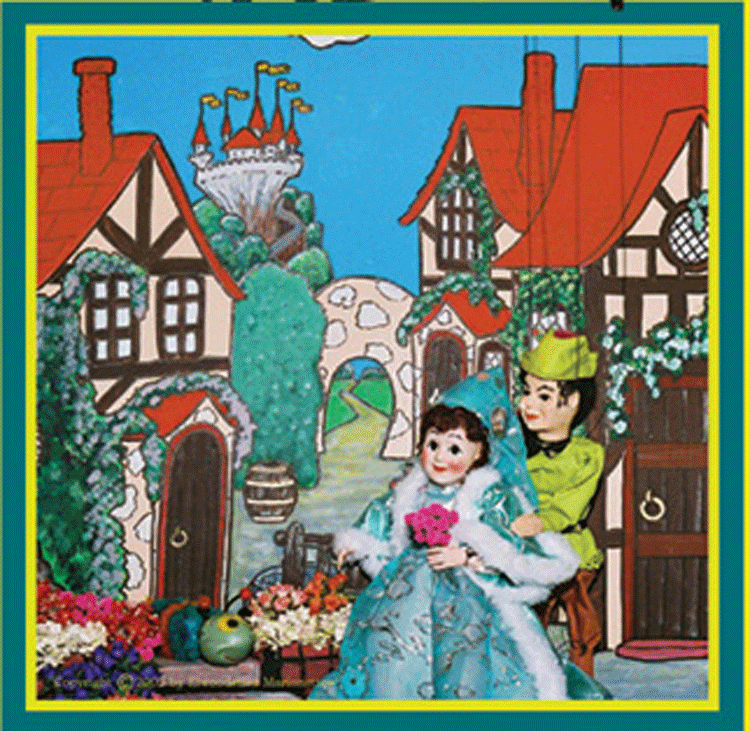
Max, our much-loved family pet, was the inspiration for fourteen of the twenty Elwoodettes shows, and with his puppet look-alike, he made over 100 bows on the stage of the Bernie Legge Theatre. Our cat, Minx, the Manx, also exists in puppet form, although she, cantankerous cat that she is, never deigns to go down to the theatre in person. However, audiences who came to our marionette musicals at the Bernie Legge Theatre were familiar with the ongoing feud between Max and Minx. The onstage shenanigans between the misbehaved pair were definitely taken from life. Both cat and dog were feisty in nature and often misbehaved, and their rivalry continued on into old age.
The Heavenly George and the Angelic Bean from The Cinderella CaperGeorgina and Beanie
Their ongoing feud seemed most ironical, since their predecessors, Beanie and Georgina, were exemplary pets, so much so that they featured in our show, The Cinderella Caper, as The Heavenly George and The Angelic Bean, coming to earth to help Max solve the problem of an exploding pumpkin, and expressing horror at the lapse in taste their master had shown in acquiring their replacements. So before I embark on the story of Max, I should say a few words about his predecessors, and what was happening in our household in the days before he arrived.
Actually, Max had had many predecessors over my lifetime. From my childhood in England, there was Puddy, the Persian, who used to tree the cat next door, and Winky, the white mouse, whose goal in life was to avoid Puddy. Once in Canada, I fell in love with Pooch and Rocky, two beautiful borrow-a-dogs, until the family acquired a dog of its own – the mutt in question being a Belgian Shepherd cross named Maverick who was hell-on-paws and as wild as his name suggested. Maverick was followed by Circe, Cerberus and Diana, three gentle German Shepherds, and Lighthouse, a big black moggy who we found abandoned in Lighthouse Park. However, Max’s immediate predecessors were George and Beanie, the pets Hugh and I adopted when we were first married. George and Beanie were loving household companions, who oversaw the arrival of our two daughters, Caroline and Katie, with equanimity and proceeded to treat them with the same anxious maternal supervision as Nana demonstrated towards the Darling children in Peter Pan.
George on holidayGeorge takes a wine tour on our honeymoon
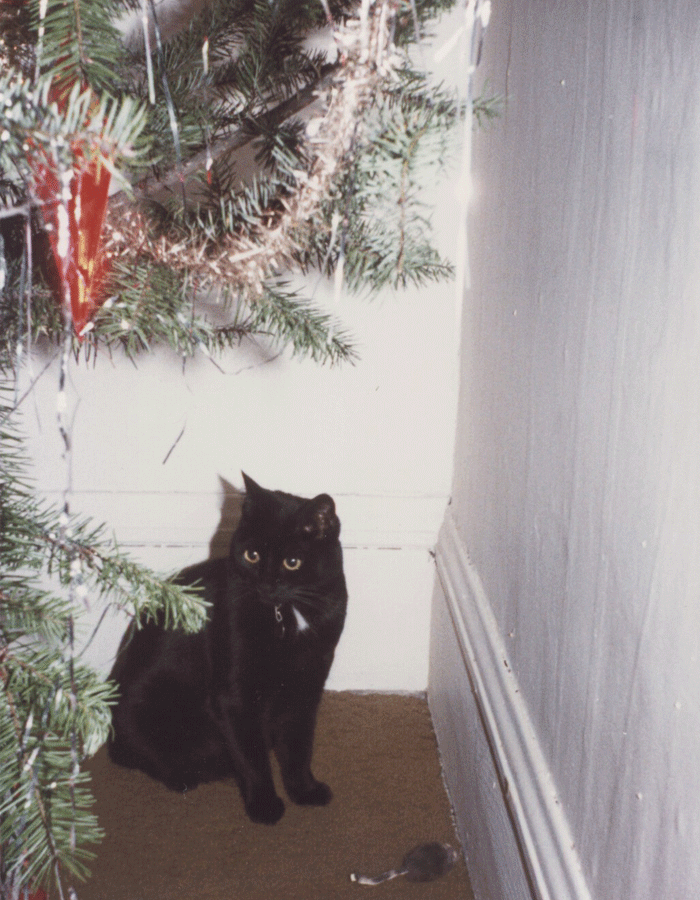
Georgina was a silky, black Halloween cat, with yellow eyes and a gentle disposition. She walked on a leash or rode in a snugli, and also travelled well. She not only came with us on our honeymoon to Santa Barbara, riding serenely in an open basket as we went sight-seeing, but accompanied us regularly on family holidays.
BeanieEarly days.
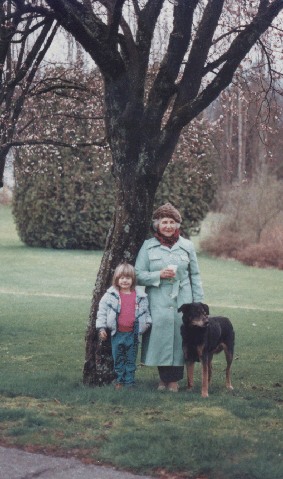
We acquired Beanie when George was two. After receiving a few disciplinary whacks on the nose, the puppy settled down and treated George with respect. However odd it might seem, given that Beanie was a Dobie/Shepherd cross, Georgina decided that the dog was her baby, and the two were bonded for life. When Beanie was old, she developed congestive heart disease, and we would often come home to find Georgina snuggled up to her on the floor, comforting her when she didn’t feel well. It was heartbreaking, but not a surprise, when Georgina’s own health deteriorated rapidly after Beanie died.
George and Beanie had infinite tolerance for the children’s over-exuberant affection.
Our household didn’t seem right without a dog, and our daughters were anxious to adopt another one. Thinking a new puppy might perk up Georgina, we agreed, and all set off for the pound. Not surprisingly, the girls immediately picked a puppy that looked just like a young version of Beanie. It seemed docile enough, but to our horror, once home with the family, the puppy turned out to be hysterical and anxious, terrorizing the cat and biting everyone in the family within the first week. With a distressed elderly cat on my hands, and a puppy that was clearly agitated at being in a household with lively children, I had a major problem on my hands. Carson Wilson, the head of the Burnaby SPCA at that time, was a kind-hearted man who loved animals and was into practical solutions. He assessed the situation quickly. Lucky was a puppy that needed a laid-back environment. Within the week, he had found her a perfect home – a hobby farm where she could hang out and interact-or -not with humans at will. A Lucky dog indeed. The children were sorry to see her go, in spite of the chewed portions of their anatomy, but Georgina breathed a visible sigh of relief and settled down to her declining months in peace and quiet.
Georgina
Our darling George passed on to Cat Heaven on December 8, 1992. Needless to say, Christmas was subdued that year. However, soon the girls began to push for another dog, so I called Michael Weeks, the then head of the Vancouver branch of the SPCA, and let him know that we were in the market for a new pet. Not that I needed a puppy in the home at that point, for we were busy preparing our first family puppet venture, a marathon effort involving nine children and myself, all alternating as puppeteers and vocalists, taking an hour-long show to three different venues as a charity fundraiser for Canuck Place. A couple of days before our first performance date, Michael called me back and told me about a dog that needed a home. This was not to be an adoption from the SPCA, but a private arrangement. Michael had received a call from a lady who wanted to find a good owner for their four-month-old puppy due to the fact that her son had health problems and she was having trouble coping. The dog was a husky- shepherd cross.
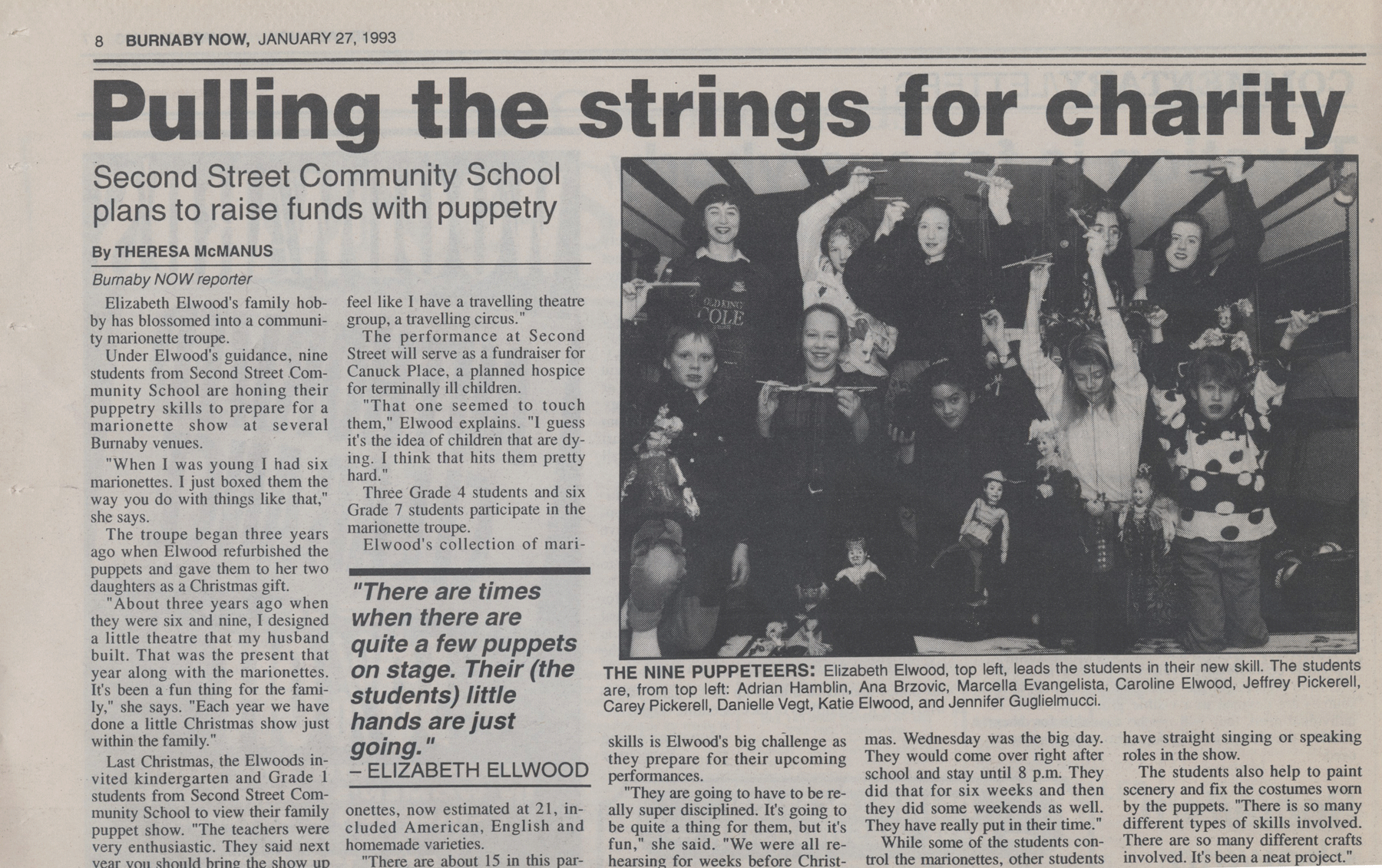
Burnaby Now coverage of the Babes in the Wood project – a wonderful group of children!
On January 27, 1993, my youthful troupe of performers sang and stringed their way through four performances of Babes in the Wood at Second Street Community School. Between shows, I alternated between keeping the kids happy, dealing with local newspaper coverage and making calls to the RCMP to talk my way out of the parking ticket I’d found on my windshield the previous day when I’d returned to my car after loading all the show equipment into the school. At the end of the school day, Hugh, who was teaching at Alpha at the time, hurried over to join us. My mother had come over from West Vancouver to see the show, so she looked after the girls while Hugh and I dismantled the theatre, loaded it into the trailer, and moved it to the George Derby Centre in preparation for the next show. Once we finished unloading our gear, we returned to pick up Mum and the girls and took them out to dinner. No, I didn’t feel like cooking that day.
However, the work of the day was not yet complete. My diary for that day closes with the following entry: “Then to Delta to see a dog called Max that might be up for adoption.” Such a casual note to signal what was in store.